


GURRIERS at M.Ou.Co – No one asked to be saved
When Really Good Time began to play, the M.Ou.Co. venue was still only half-full – a far cry from the sold-out room we would see shortly after for Gurriers. Many people were still arriving, having dinner, grabbing a drink, or had simply decided to show up only for the headliner. Their loss.
Really Good Time
(full gallery below)
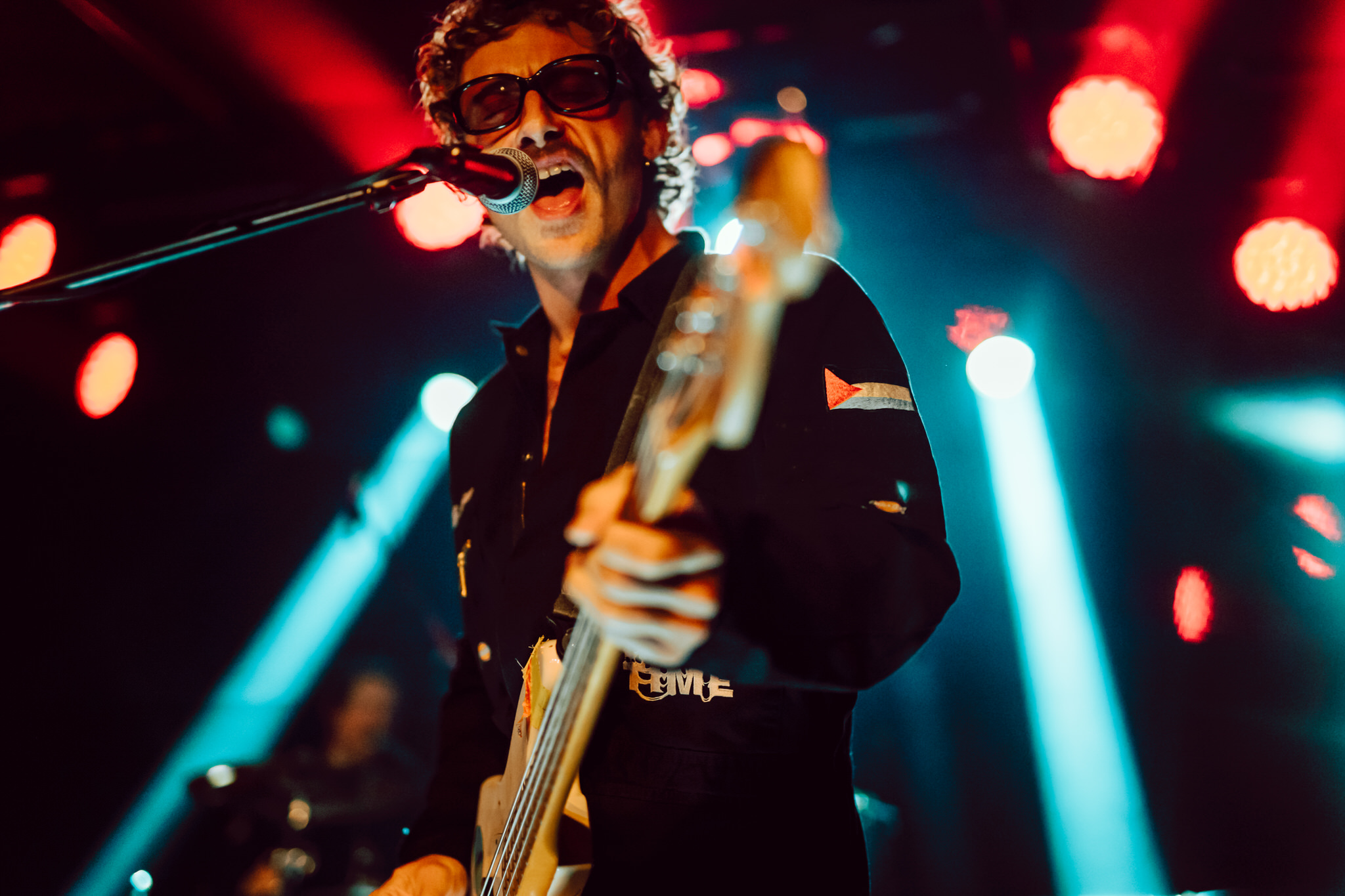
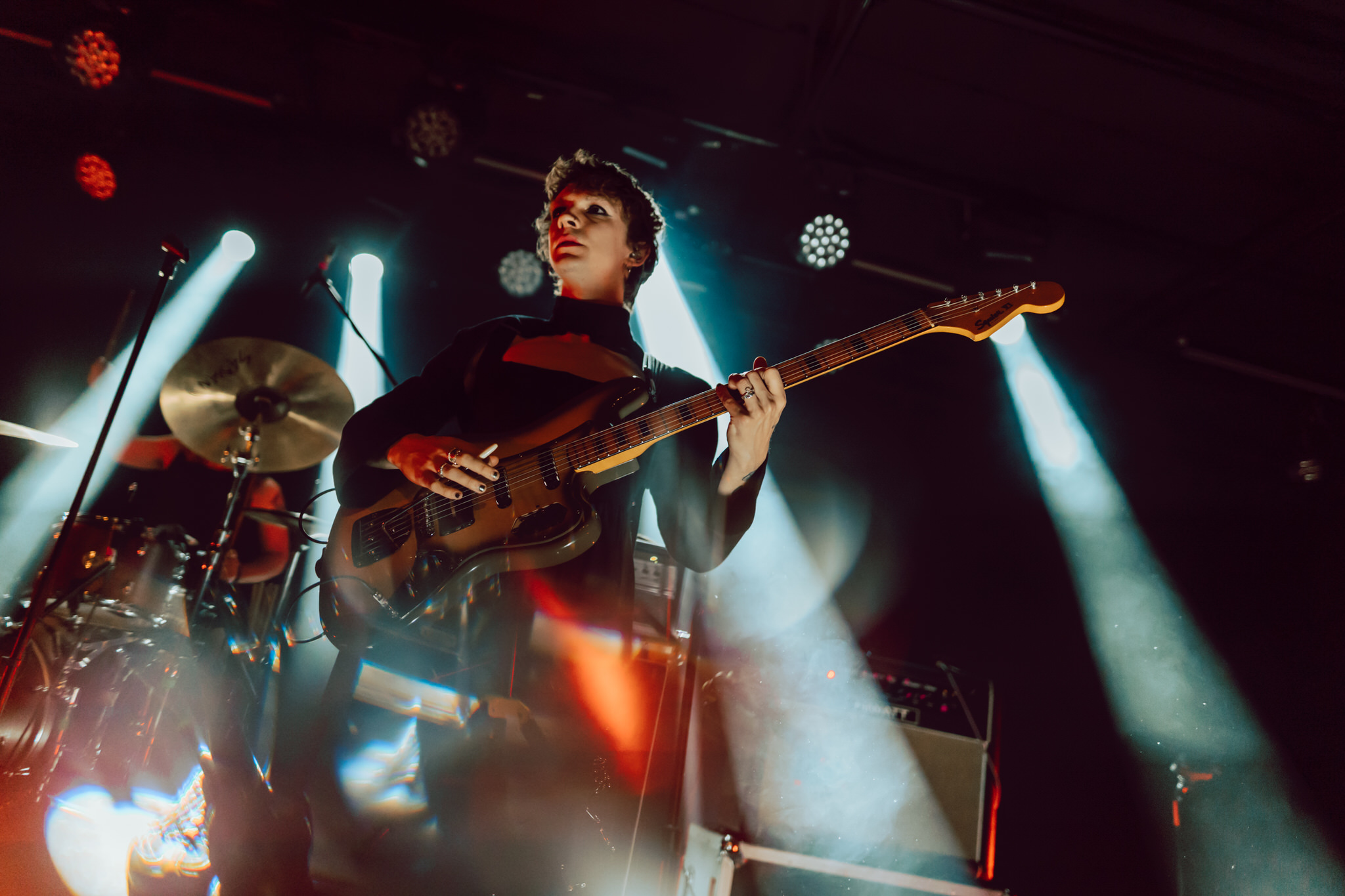
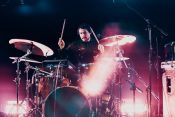
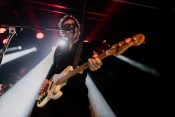
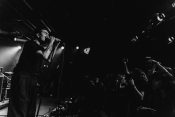
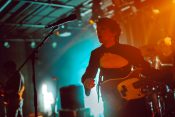
Also hailing from Dublin, Really Good Time took the stage in black jumpsuits, each with a Palestinian flag embroidered on the shoulder, and immediately made it clear that being the “opening act” was merely a matter of scheduling. Their sound oscillated between indie rock, post-punk, art rock, and alternative rock, with no need to commit to any single style.
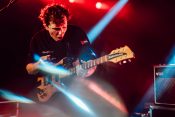
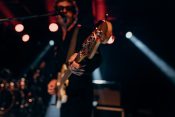
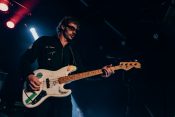
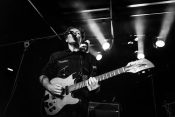
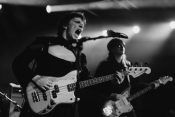
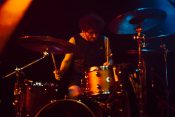
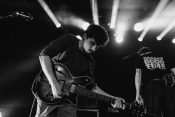
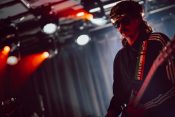
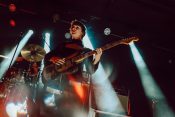
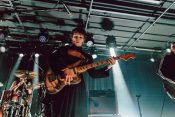
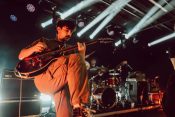
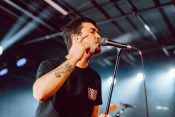
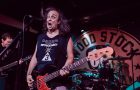
The bass was prominent, the drums were heavy, and the guitar alternated between sharp, angular riffs and a mix of effects, loops, and noise. And then there was the bassist: sporting yellow-tinted glasses and seemingly fueled by an inexhaustible supply of energy, he spent the entire set rallying the crowd. He didn’t just play; he provoked, demanded noise, waded into the audience, sought engagement, and refused to accept that a half-empty room had to be lifeless. He and the guitarist traded vocal duties, which added an interesting dynamic to the songs and dispelled the notion of a single, central protagonist on stage.
Between modulations, loops, layers of noise, and a foot-operated siren, the guitarist filled the gaps left by the bass and drums, making the trio sound far larger than their actual presence on stage suggested. By the time they finished, no one who had witnessed the performance would have thought of it as merely a “warm-up.” Really Good Time had delivered a concert that lived up to their name, in front of an audience smaller than they deserved.
Moments later, it felt as though we were in an entirely different room.
Gurriers
(full gallery below)
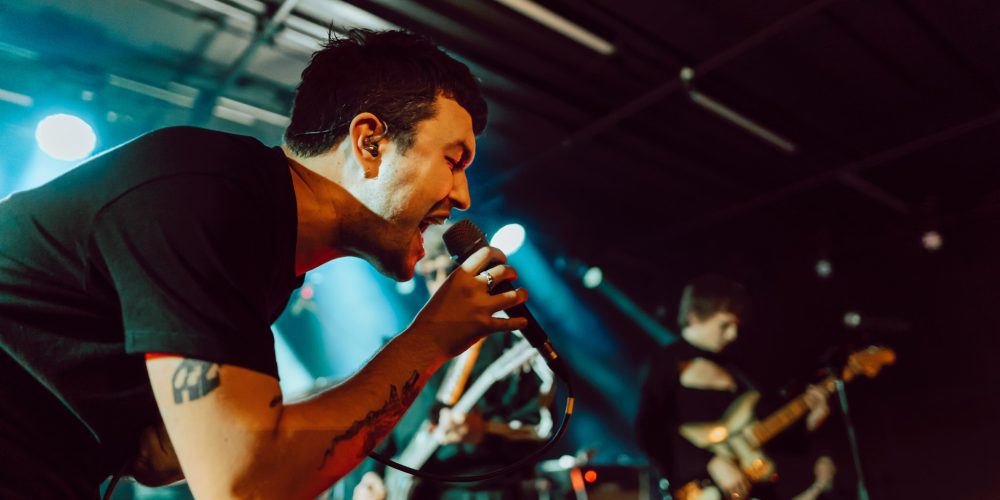
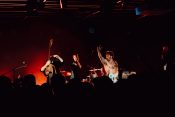
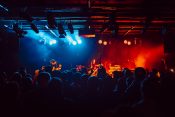
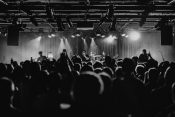
For Gurriers, M.Ou.Co. was packed to capacity. The extra space that had been available during the first concert had vanished.
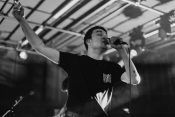
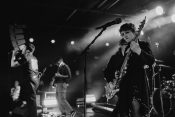
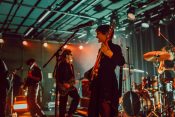
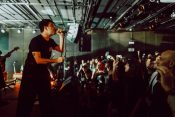
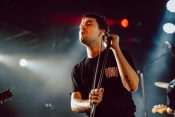
Gurriers kicked off their set with “Nobody’s Coming o Save You,” keeping things relatively restrained. “Party Lines” began to liven up the room, and “Nausea” truly sealed the deal – the mosh pit erupted, effectively putting an end to any chance of watching the rest of the show from a calm, stationary position.
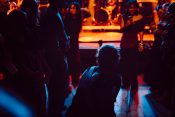
“Des Goblin” and “Pins” were met with an audience more than willing to join in. M.Ou.Co. began to heat up in earnest – and not just because of the sound pouring from the speakers. With so many people packed together, jumping around and colliding, sweat quickly became an integral part of the atmosphere.
“Today Is Not Enough” demonstrated that the band doesn’t need to be firing on all cylinders at every moment to make an impact. Some of their tracks tighten their grip gradually; they offer a bit of breathing room at the start, letting the tension build, until – before you know it—you’re buried once again beneath a wall of guitars. This ability to cultivate tension was one of the show’s greatest strengths. The “heaviness” didn’t stem solely from the volume; it also came from the anticipation of the next explosive release.
“Nothing Happens Twice” and “Shades” kept the room in constant motion, while during “Dipping Out,” a guitar part was recorded and looped on stage – intensifying a sound that, in truth, needed no further embellishment to fill every corner of M.Ou.Co.
The heat intensified, the mosh pit expanded and contracted at the whim of the crowd, bodies kept surging over one another, and beer – defying all containment – refused to stay in its cups.
At the end of “Erasure,” the band let out a cry of “Free Palestine,” which the audience immediately echoed back. This political stance had already been visible on the jumpsuits worn by Really Good Time, and with Gurriers, it now resonated throughout the venue.
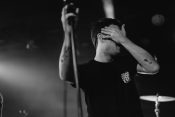
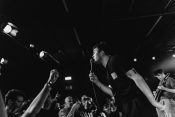
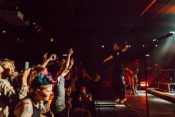
Then came “Come and See,” which shifted the tempo. Slower – yet losing none of its weight – it offered a brief respite from the constant shoving, before “Drones” thrust everything forward once again. It was then that the lead singer decided that performing from the stage was no longer enough, and he descended into the thick of the crowd. The boundary between the stage and the audience had been dissolving for some time.
Following “Interlude,” “Top of the Bill” didn’t hold back the crowd, even though it wasn’t one of the set’s most high-octane tracks – by this point, little encouragement was needed.
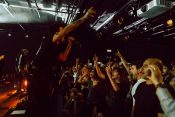
During “Waiting for Fisher,” the space opened up into a massive circle pit amidst the audience. The crowd surged and collapsed in on itself, and shortly thereafter, one of the concert’s highlights unfolded: the guitarist approached the front row, hoisting his guitar high toward the audience. Hands appeared immediately.
For a few seconds, people in the front row strummed the strings while he held the instrument. It didn’t result in a solo for the history books, but no one was particularly concerned about that – the noise was the whole point. Meanwhile, someone handed him a beer, which he naturally accepted.
“Approachable” extended this sense of closeness, creating one of the most laid-back moments of the night. The song was dedicated to Portugal, and the lead singer began swapping the word “approachable” for “I’m in Portugal.” The joke caught on quickly, and – as if to complete the scene – a large portuguese-themed hat suddenly appeared on the guitarist’s head.
Usually, mentioning the name of the country where you’re performing is the oldest trick in the touring playbook: shout “Portugal,” the crowd shouts back, and a moment of shared connection is forged. But by that point, no one needed to be won over anymore.
By the time the concert drew to a close, the atmosphere inside M.Ou.Co. was significantly hotter and more humid than it had been at the start.
Some people had shirts clinging to their bodies; others had spent half the night in the mosh pit – or, in some cases, surfing above it.
It seemed like the perfect setup for one final, explosive burst. Gurriers did the opposite.
“I Wish I Was” began to lower the collective heart rate, and when “Crybaby” was announced as the final track, protests immediately erupted from those who weren’t ready for it to end.
The show concluded without the need for another mosh pit. “Crybaby” kept the rhythm going, but allowed the adrenaline to finally begin to subside. And it felt just right.
After a night packed with guitars, mosh pits, crowdsurfing, sweat, beer, and musicians venturing right into the heart of the audience, ending with yet another explosion would have been all too predictable. Gurriers chose to let the distortion and the heated energy subside, defying the audience’s expectations.
In the end, the opening song, “Nobody’s Coming to Save You,” didn’t entirely ring true: amidst the chaos – with people shoving and bodies flying – everyone was supporting one another, all there for the very same reason.
Text by Marcos Leal | Photos by Ricardo Silva
Really Good Time

Gurriers





Comments are closed.