

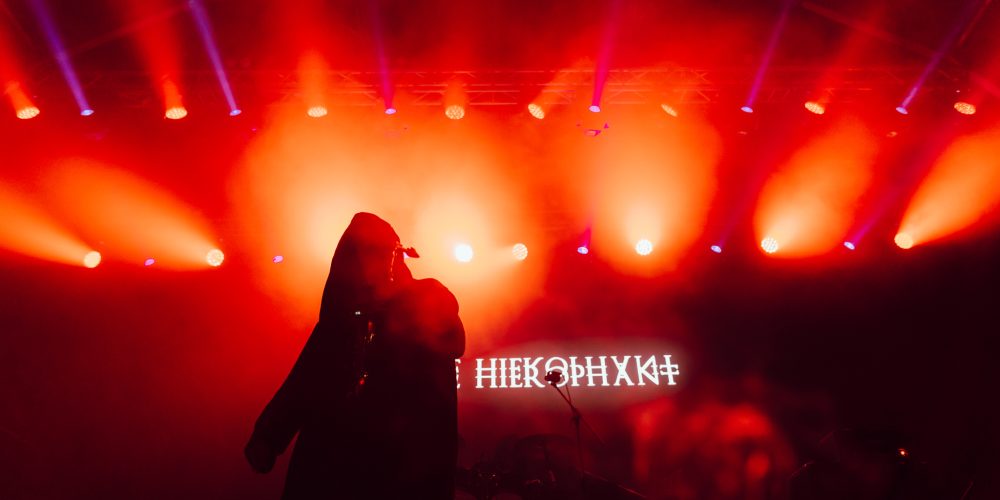
Inferno das Febras 2026: A broad view of Portugal’s Underground
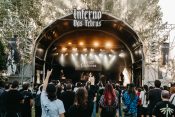
The eighth edition of Inferno das Febras took place on 28 and 29 August at Parque de Lazer de Casais, bringing together an unusually broad selection of heavy and alternative music in a setting that has become closely associated with the festival.
Across two days, the programme moved between death metal, grindcore, metalcore, hardcore, crossover, sludge, doom, stoner rock, post-rock, psychedelic music and experimental territory, combining internationally established names with a substantial representation of Portugal’s underground scene.
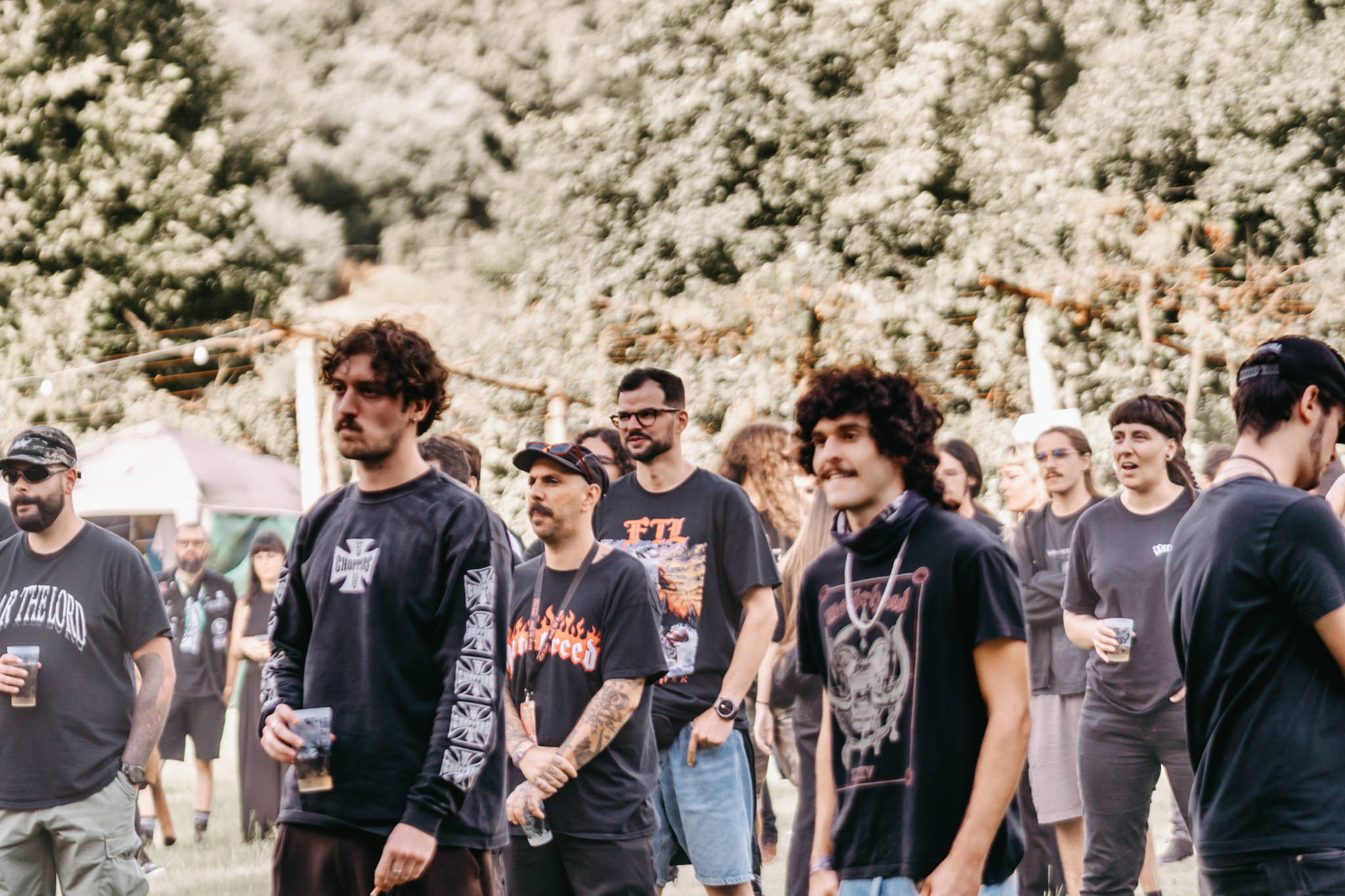
The 2026 edition arrived at an important point in the festival’s development. Earlier in the year, Inferno das Febras was recognised as the Best Small Festival at the Iberian Festival Awards, while the programme itself demonstrated why the event has gradually established a distinct position within Portugal’s independent festival circuit. Rather than concentrating on one specific branch of heavy music, the organisation continues to build its identity around contrasts, placing historically important extreme-metal acts alongside contemporary hardcore, experimental and alternative projects.
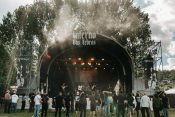
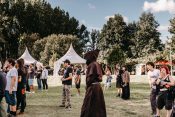
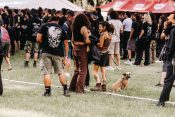
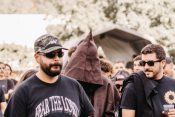
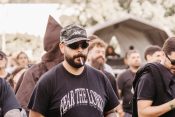
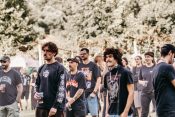
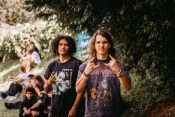
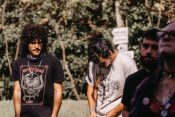
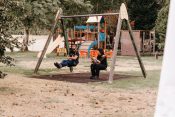
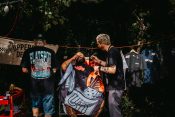
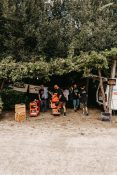
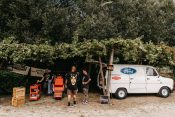
The setting also remains central to the experience. Parque de Lazer de Casais provides free camping close to the festival grounds, with the Rio Mesio and the surrounding park offering an environment considerably removed from the conventional urban concert venue. The combination of a relatively compact festival site, camping and access to the river contributes to an atmosphere in which the distinction between audience, musicians and the wider underground community is less pronounced.
Cat Soup: Instrumental Post-Rock and Mathematical Structures
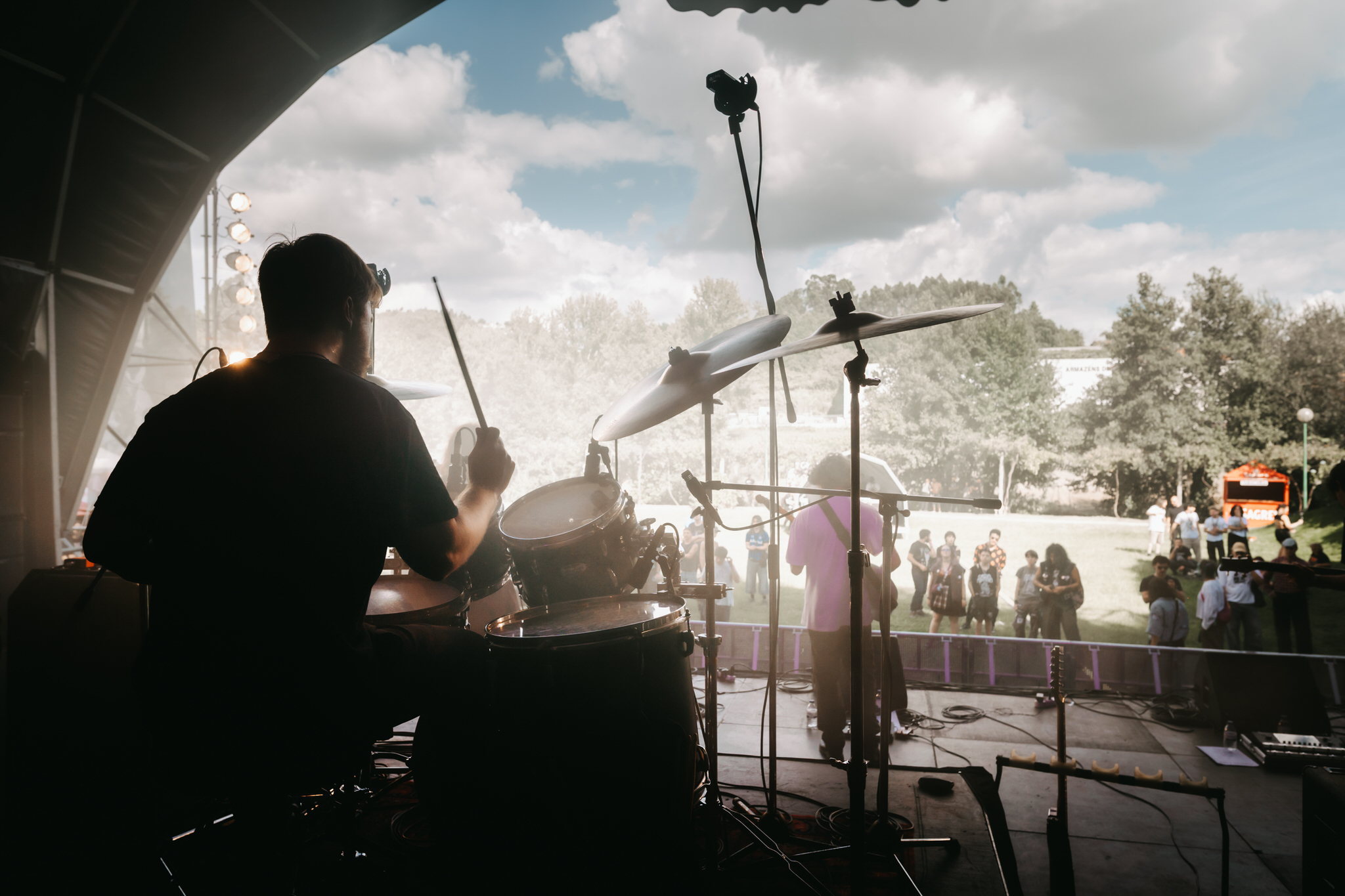
(full gallery below)
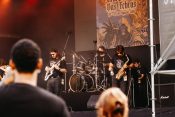
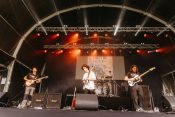
Cat Soup provided one of the most significant departures from conventional metal within the Portuguese programme.
Formed in Porto in 2015, the instrumental quartet works within a broad territory incorporating post-rock, alternative rock and heavier atmospheric music. Their compositions often use unusual structures, dynamic shifts and rhythmic patterns rather than relying on conventional verse-and-chorus arrangements.
Their 2026 activity included the release of “Come In, Thank You”, ahead of their first full-length record, while their previous work had already established them within Portugal’s instrumental rock scene. Their earlier recordings combine extended compositions with atmospheric and progressive elements.
Their inclusion was consistent with Inferno das Febras’ broader approach to programming. Cat Soup do not need to be defined as a metal band to make sense within the festival. Their heavier dynamics and experimental structures place them naturally alongside the festival’s doom, sludge and avant-garde acts.
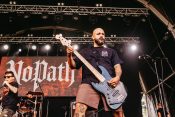
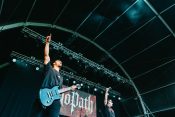
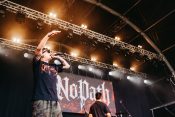
No Path: Contemporary Portuguese Heaviness
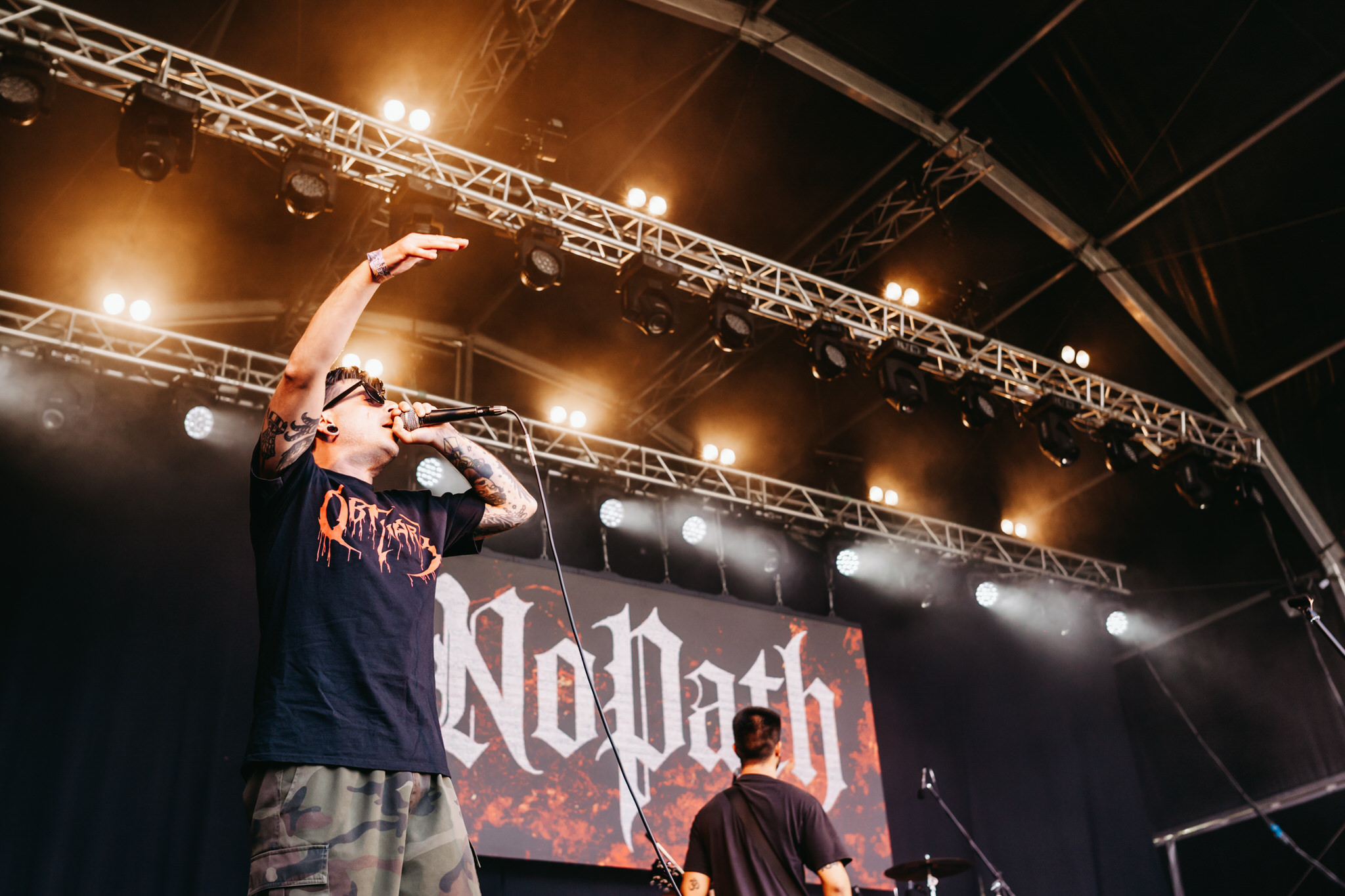
(full gallery below)
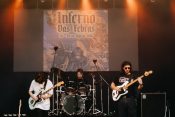
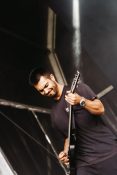
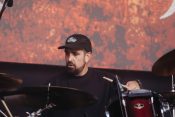
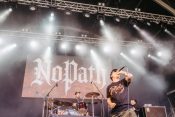
No Path represented another facet of Portugal’s contemporary heavy-music underground, bringing a more modern approach to the festival’s first-day programme. No Path’s position alongside bands such as Grog, Equaleft and Vaneno was significant. It placed a newer generation of Portuguese musicians in direct proximity to acts with considerably longer histories, illustrating how different stages of the country’s heavy scene can coexist within the same programme.
Their music is built around a forceful, guitar-driven sound, combining heaviness with a contemporary approach to arrangement and dynamics. The band has developed its identity within Portugal’s independent circuit through live performances and releases, contributing to the continued development of the country’s underground outside the more established festival network.
Their appearance also contributed to the more contemporary side of the festival’s first day, sitting comfortably alongside the heavier and more rhythmically modern approach of the international acts. Rather than functioning simply as a local addition to an international bill, No Path formed part of the broader generational contrast that characterised Inferno das Febras 2026.
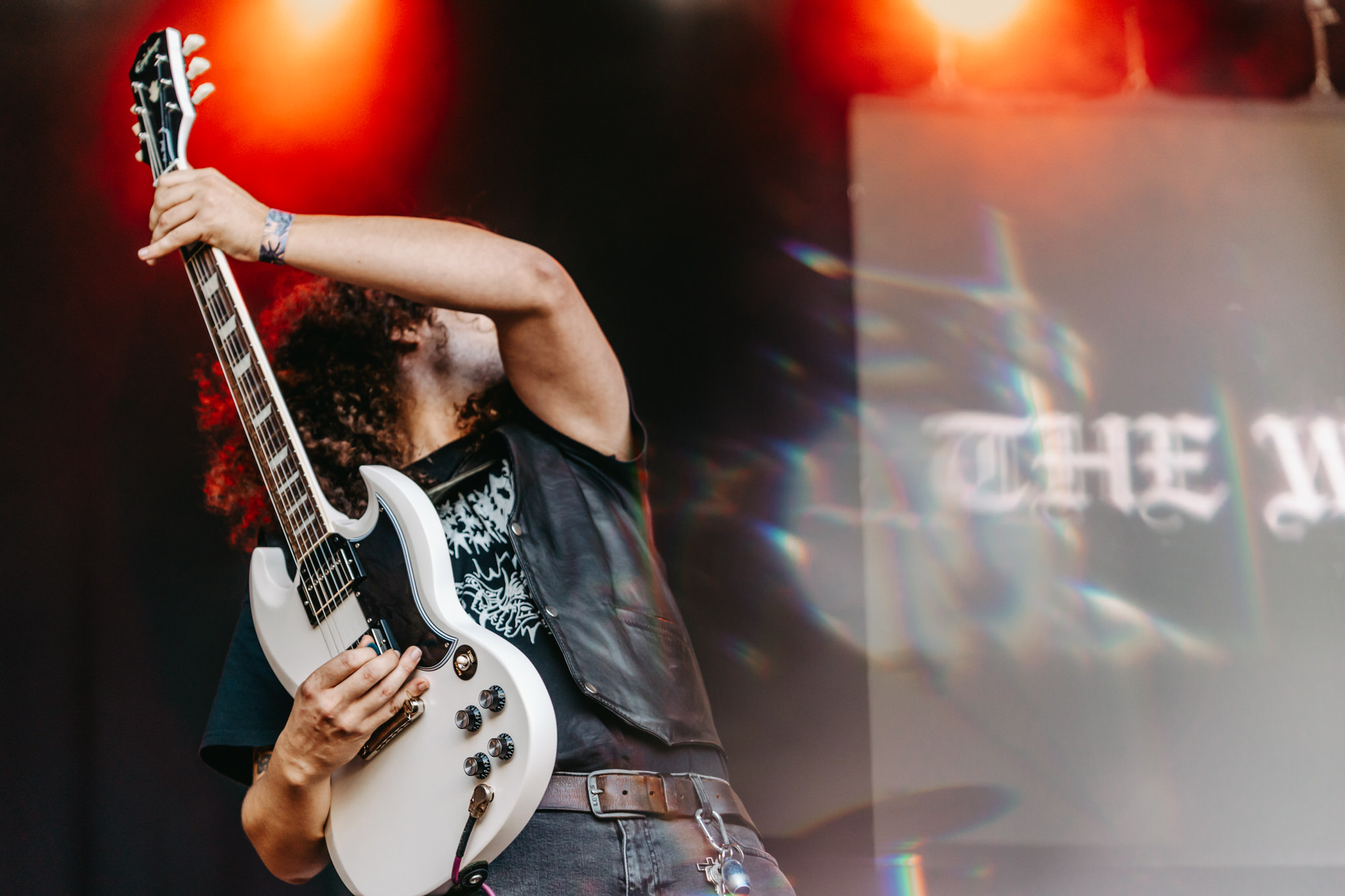
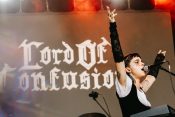
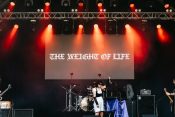
Lord of Confusion: Doom as Atmosphere
(full gallery below)
Leiria’s Lord of Confusion represented the darker and slower side of the Portuguese programme.
Formed in 2018, the band developed through informal jam sessions before building a sound around stoner and doom metal. Their approach is particularly concerned with atmosphere, repetition and the weight of individual notes.
The band combines heavy guitar and bass with keyboards and vocals, creating a dense sound that has been described by the band itself as an “Evil Doom” approach. Their material includes Burnin’ Valley, The Weight of Life, Evil Mystery and Witchmantia.
On stage, however, the emphasis shifted from the studio characteristics of the music to its physical weight. Lord of Confusion took their time with the material, allowing the riffs to develop rather than rushing through transitions. The sustained guitar tones and heavy low end created a dense presence at the festival, while the slower passages gave the performance a deliberate sense of tension.
The band’s live approach also made effective use of contrast. Heavier sections were given enough space to settle before the next movement, allowing the atmosphere to build gradually rather than relying exclusively on volume. The keyboards added another layer to the arrangements, reinforcing the darker character of the performance without dominating the guitars and rhythm section.
This made Lord of Confusion a natural fit for the festival’s broader aesthetic. Where Grog represented speed and extremity and Equaleft focused on groove and modern metal, Lord of Confusion relied on space, repetition and heaviness. Their performance provided a slower, more immersive counterpoint to the faster and more aggressive acts elsewhere in the programme.
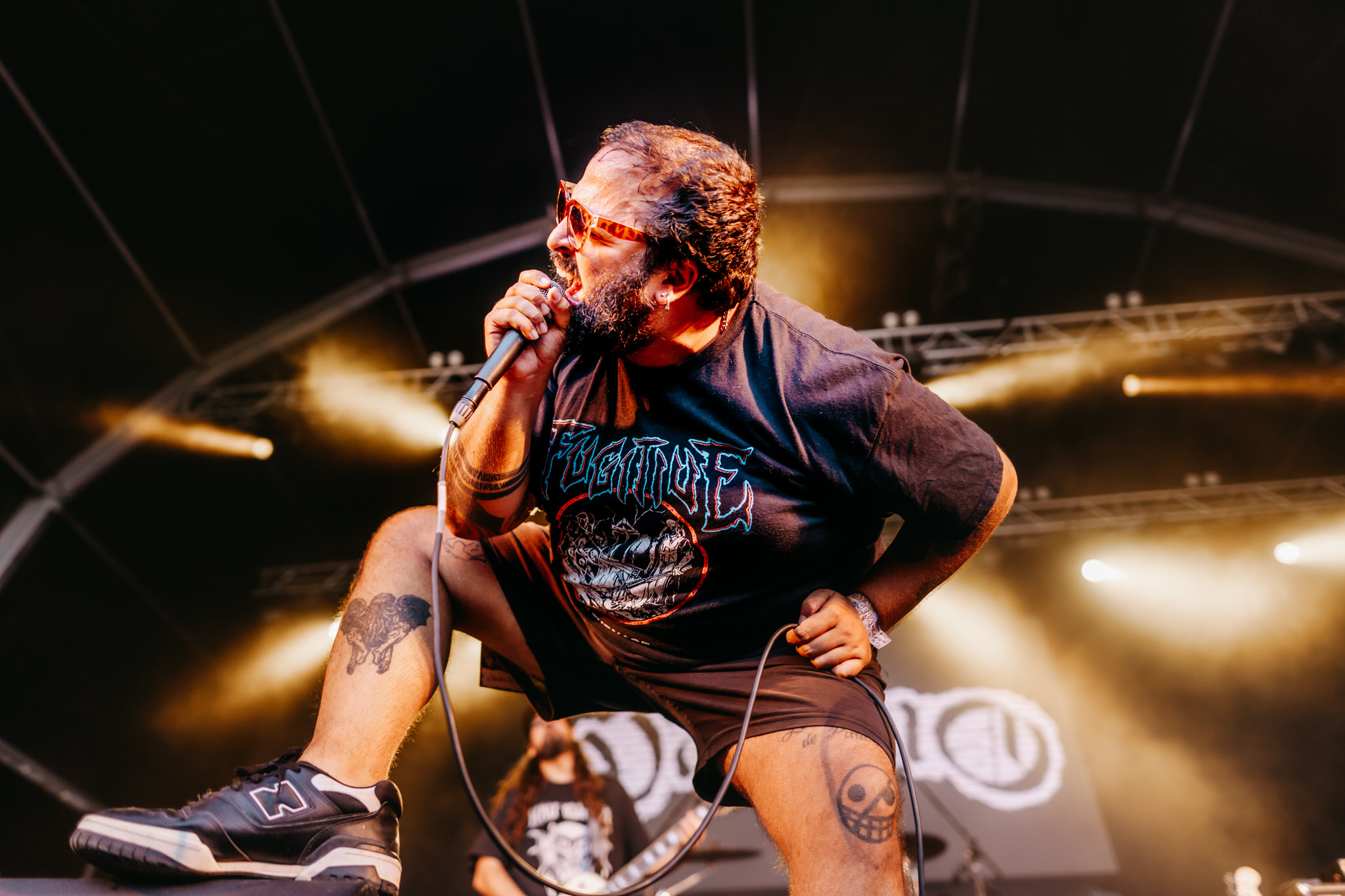
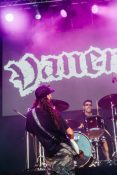
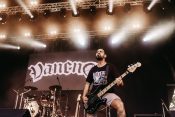
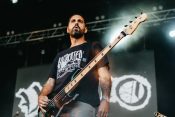
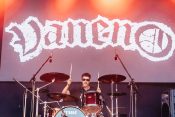
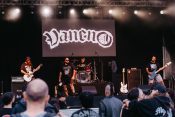
Vaneno: Sludge, Stoner and Death Metal
(full gallery below)
Lisbon’s Vaneno occupied a more conventionally heavy position within the Portuguese contingent, bringing together sludge, stoner, doom and death metal in a performance built around weight and density.
Formed in 2017, the band has developed a sound centred on heavy guitar work, combining the slower, more oppressive characteristics of sludge and doom with the groove of stoner metal and the harsher edge of death metal. Live, those elements gave their set a distinctly physical character, with the guitars carrying much of the band’s sonic weight and the rhythm section providing the foundation for its heavier passages.
Rather than relying on elaborate staging, Vaneno’s performance was primarily driven by the music itself. The contrast between slower, heavier sections and more aggressive moments gave the set a sense of movement, allowing the band to explore different aspects of its sound without moving too far from its central emphasis on heaviness.
Their appearance also fitted naturally into the first day’s programme, positioned between several different interpretations of extreme and underground music. Vaneno provided a more direct expression of sludge and death metal, while still retaining the groove-oriented elements that connect their music to the broader stoner and doom tradition.
Within the Portuguese contingent, their performance demonstrated how naturally these different underground influences can coexist, reinforcing one of the defining characteristics of Inferno das Febras: a programme where different forms of heavy music can share the same stage without being reduced to a single stylistic direction.
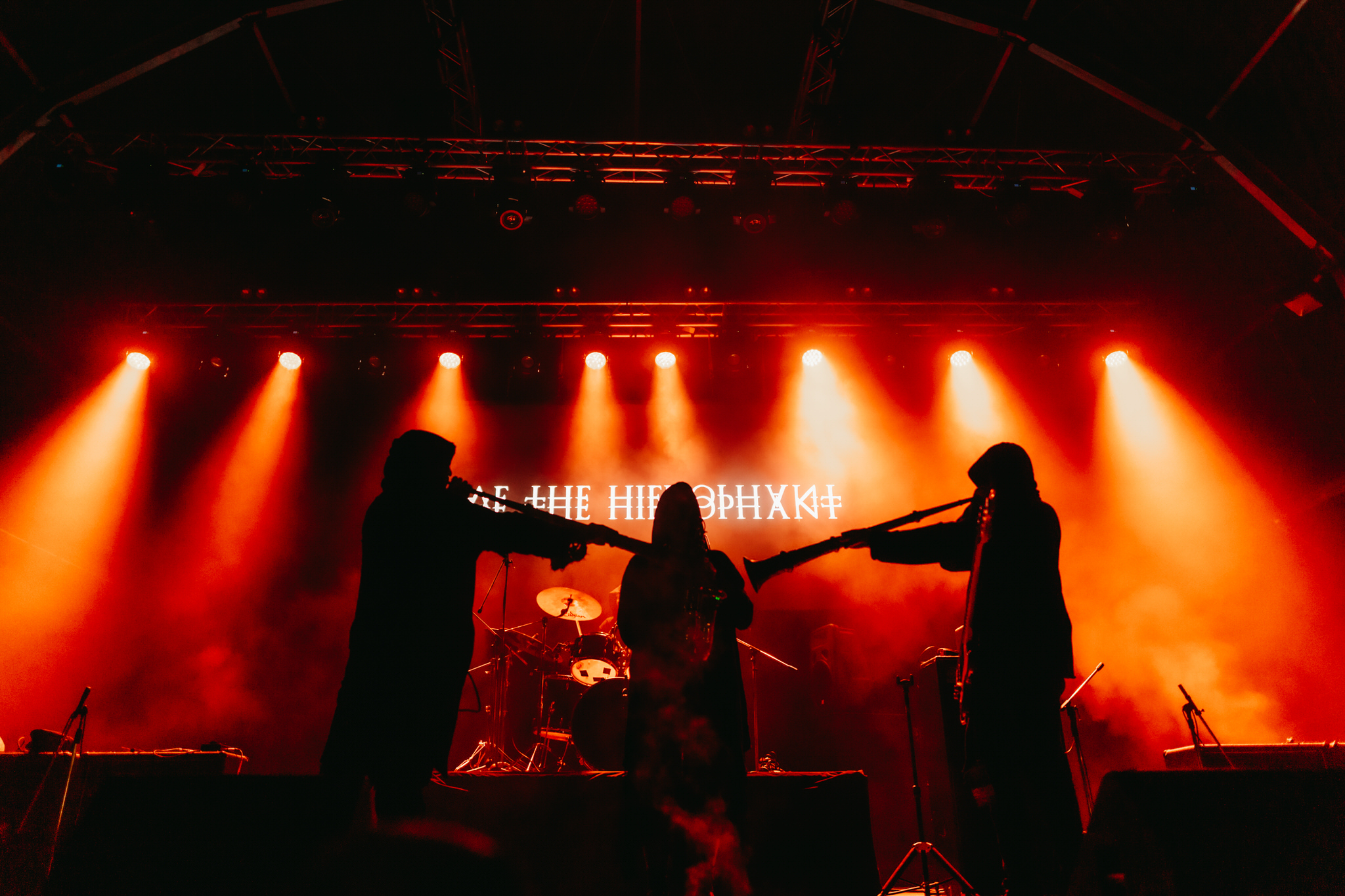
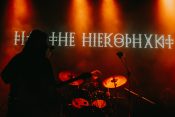
Five the Hierophant: Experimental Music Without Conventional Boundaries
(full gallery below)
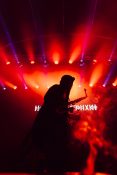
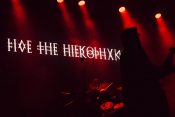
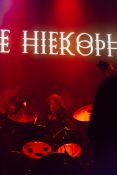
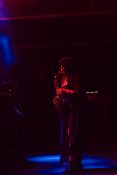
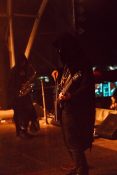
London-based Five the Hierophant were arguably among the most stylistically difficult acts to categorise on the programme.
Active since 2014, the band combines elements of avant-garde metal, post-black metal, doom, dark ambient and jazz. Saxophone, percussion, unconventional instrumentation and atmospheric passages form an important part of their identity, resulting in music that operates as much through texture and mood as through conventional riff structures.
Their discography includes Over Phlegethon (2017), Through Aureate Void (2021) and Apeiron (2024), with the latter continuing the band’s exploration of instrumental and atmospheric territory.
Within Inferno das Febras, Five the Hierophant provided a particularly strong example of the festival’s openness to experimental music. Their presence widened the definition of what could be considered part of a heavy-music festival, demonstrating that intensity does not necessarily depend on conventional song structures.
The band’s use of saxophone and percussion alongside guitars and drums also gave the festival a sonic dimension that was largely absent from the more traditional metal acts elsewhere on the bill.
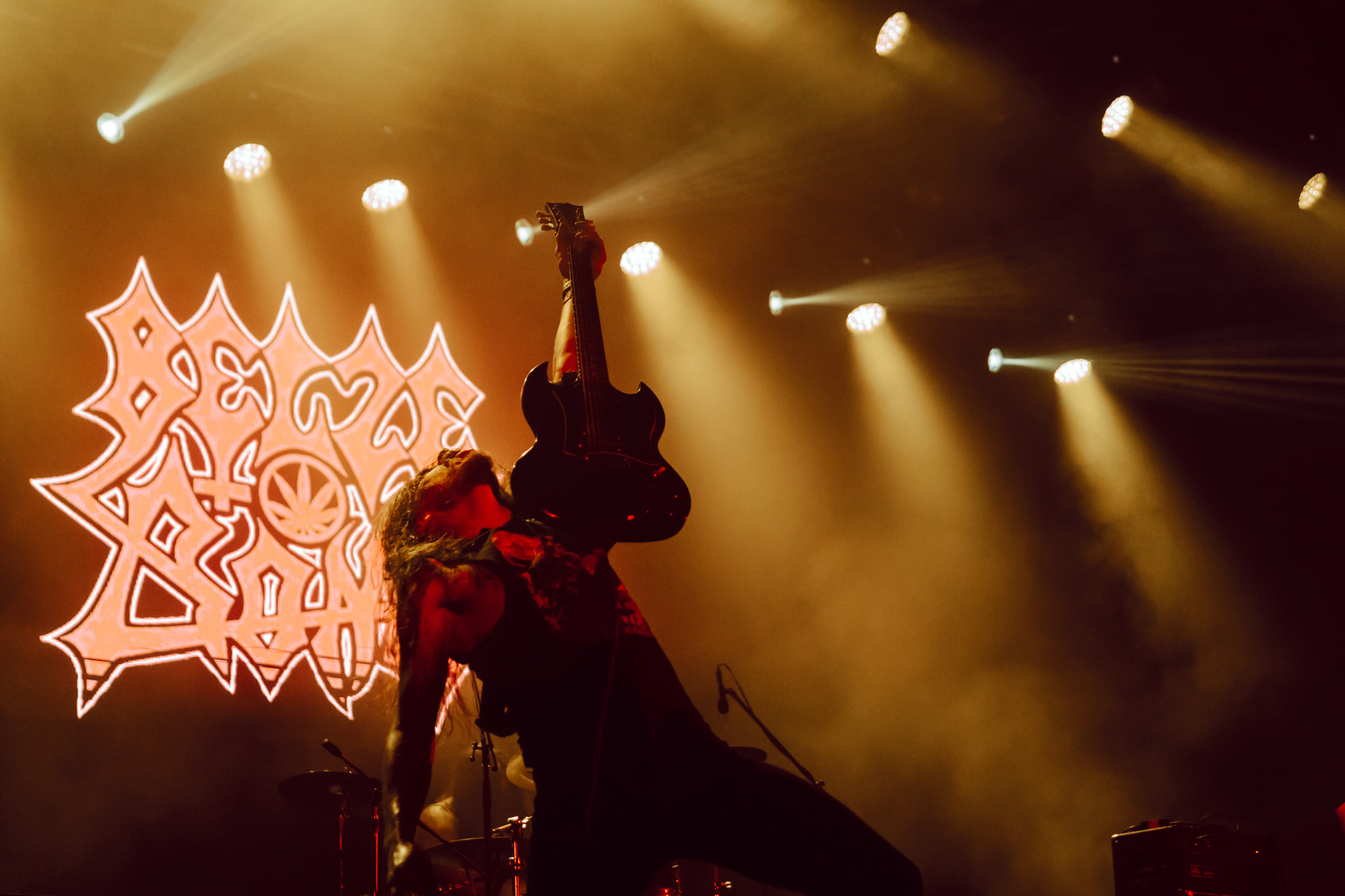
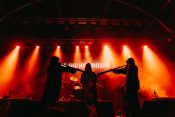
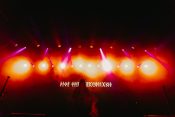
Belzebong: The Slow Weight of Stoner Doom
(full gallery below)
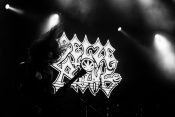
Polish band Belzebong brought the festival towards the slower end of its musical spectrum. Their stoner-doom approach is built around extended riffs, repetition and a deliberately heavy atmosphere, placing them within a tradition that connects doom metal with psychedelic rock and the heavier side of stoner music.
Their return to Portugal was particularly notable, as their previous appearance in the country had taken place in 2019 at SonicBlast.
Belzebong’s role within the festival was complementary to the faster bands elsewhere on the programme. Rather than relying on speed or technical density, their music operates through weight and sustained repetition. This made them a natural fit for a festival whose programme regularly moves between different interpretations of heaviness.
The inclusion of Belzebong also reinforced the international dimension of the festival’s stoner and doom programme, alongside the darker approach of Portugal’s Lord of Confusion and the broader experimental tendencies of Five the Hierophant.
Whores.: Noise Rock with a Physical Edge

(full gallery below)
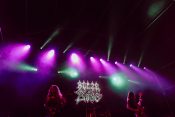
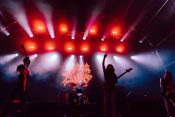
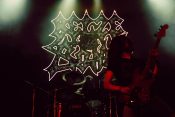
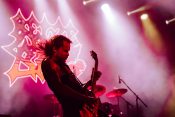
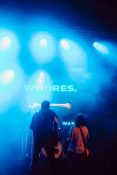
Atlanta trio Whores. occupied a different position within the festival’s heavy spectrum. Formed in 2010, the band has developed a sound that draws from noise rock, post-hardcore and the abrasive traditions associated with bands such as Helmet and the Melvins, while avoiding a straightforward revivalist approach.
The band’s line-up of Christian Lembach on vocals and guitar, Casey Maxwell on bass and Douglas Barrett on drums is built around a deliberately direct format. The music depends heavily on rhythm, distortion and tension, producing a sound that can sit comfortably alongside heavy music without relying on conventional metal structures.
Their 2016 debut full-length, Gold., established the band more widely, while WAR., released in 2024, continued to develop the same abrasive approach. The album was recorded, mixed and mastered by Ryan Boesch, whose production credits include work with Fu Manchu, Helmet and the Melvins, further connecting Whores. to the lineage from which their sound developed.
At Inferno das Febras, Whores. represented one of the clearest examples of the festival’s willingness to move outside conventional metal boundaries. Their presence demonstrated that heaviness can be achieved through dynamics, distortion and rhythmic intensity just as effectively as through traditional extreme-metal structures.
Arkangel: European Metalcore’s Hardcore Foundations

(full gallery below)
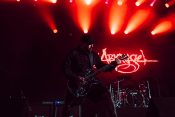
Belgian band Arkangel brought several decades of European hardcore and metalcore history to the festival. Formed in Brussels in 1997, the band became one of the better-known representatives of the European metal-hardcore movement, combining heavy guitar work with the directness and aggression of hardcore.
Their early releases, including Prayers Upon Deaf Ears and Dead Man Walking, established their position during a period when metalcore was developing rapidly across Europe and North America. Later releases such as Hope You Die by Overdose and Arkangel Is Your Enemy continued the band’s confrontational approach.
Arkangel’s place on the Inferno das Febras bill was particularly relevant because of the connections between metalcore and several of the other styles represented at the festival. Their music occupies the point where hardcore’s physicality meets metal’s weight, making them a bridge between the festival’s more extreme metal acts and its hardcore-oriented programme.
Their long history also made them one of the more established European acts on the bill, offering a contrast with younger projects while demonstrating the continuing relevance of the European hardcore tradition.
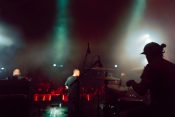
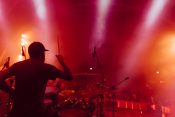
Equaleft: Groove, Modern Metal and Longevity

(full gallery below)
Equaleft have also played an important role within Portugal’s underground metal circuit. The band developed its identity around a combination of groove, low-tuned guitars and progressive influences, while maintaining a strong emphasis on live performance.
The group has been active for more than a decade and has released music through the conventional progression of demos, singles, an EP and a full-length record. Their use of extended-range guitars and groove-oriented arrangements became part of their identity within the Portuguese scene.
Equaleft’s appearance at Inferno das Febras therefore fitted naturally between the festival’s more traditional extreme-metal acts and its contemporary heavy bands. Their music retains the physical impact of groove metal while incorporating a more modern approach to composition and guitar work.
Their history also reflects one of the festival’s central characteristics: Portuguese bands with established careers are presented not as secondary attractions, but as integral components of the overall programme.
Cat Soup






No Path




Lord of Confusion






Vaneno










Five the Hierophant














Belzebong







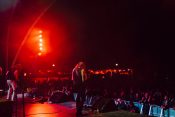

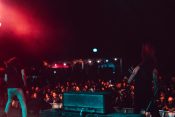
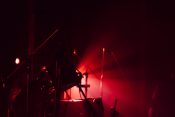
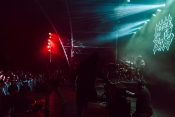
Whores.












Arkangel

















Equaleft






















Ambiente




















Comments are closed.