


Day Two: From Extreme Metal to Hardcore and Beyond
The second day of Inferno das Febras shifted the festival’s focus towards a particularly diverse combination of extreme metal, crossover, hardcore and experimental heavy music. With a programme featuring established names such as Master and Fugitive alongside EYES, Rotor and a strong selection of Portuguese acts, Saturday offered a different balance from the opening day while maintaining the festival’s commitment to stylistic variety.

The day’s line-up brought together several generations of underground music. Master represented more than four decades of death-metal history, while Fugitive approached crossover through a contemporary American perspective. EYES introduced a more experimental form of hardcore, and Rotor provided an instrumental interpretation of heavy and psychedelic rock. Around these international acts, Portuguese artists including Grog, Prayers of Sanity, OKA, Summer of Hate, 98 AXE and Navegantes da Rua further expanded the programme.
Rather than following a single musical direction, the second day continued the festival’s broader approach to heaviness. Extreme metal, hardcore, psychedelic rock and alternative sounds shared the same stage, reflecting the eclectic nature that has become one of Inferno das Febras’ defining characteristics.
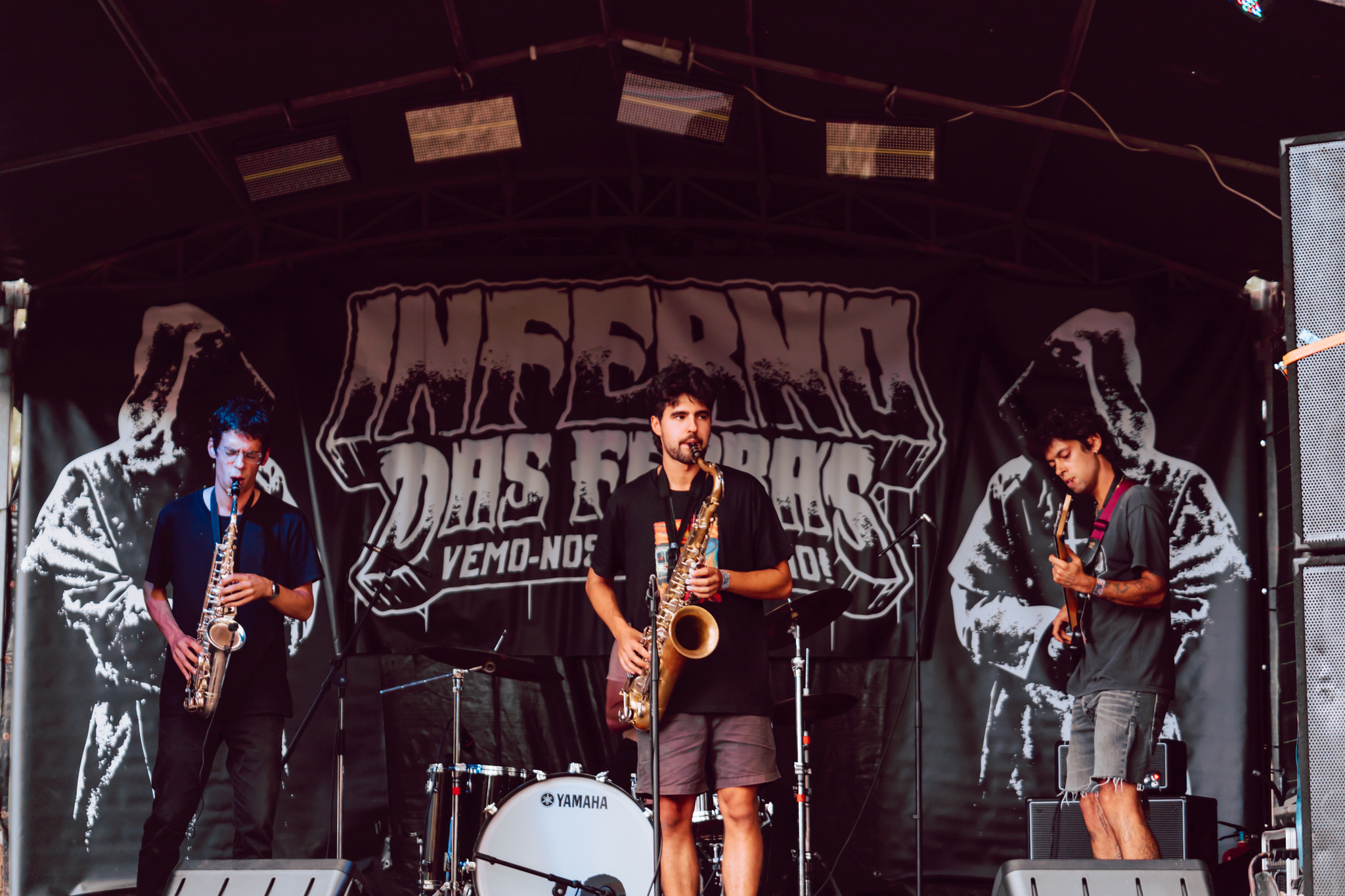
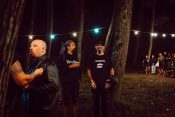
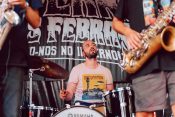
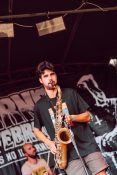
Navegantes da Rua
(full gallery below)
Navegantes da Rua completed another part of the festival’s second-day programme. Their presence reinforced the idea that Inferno das Febras is not intended as a narrowly defined metal event, despite the prominence of extreme music within its identity.
This variety is one of the festival’s most relevant characteristics. The programme does not require every act to fit into the same stylistic category; instead, it establishes a common environment where different forms of alternative and heavy music can coexist.
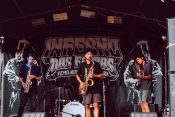
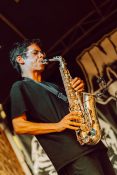
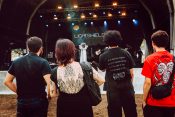
Summer of Hate: Psychedelia, Shoegaze and Noise
(full gallery below)
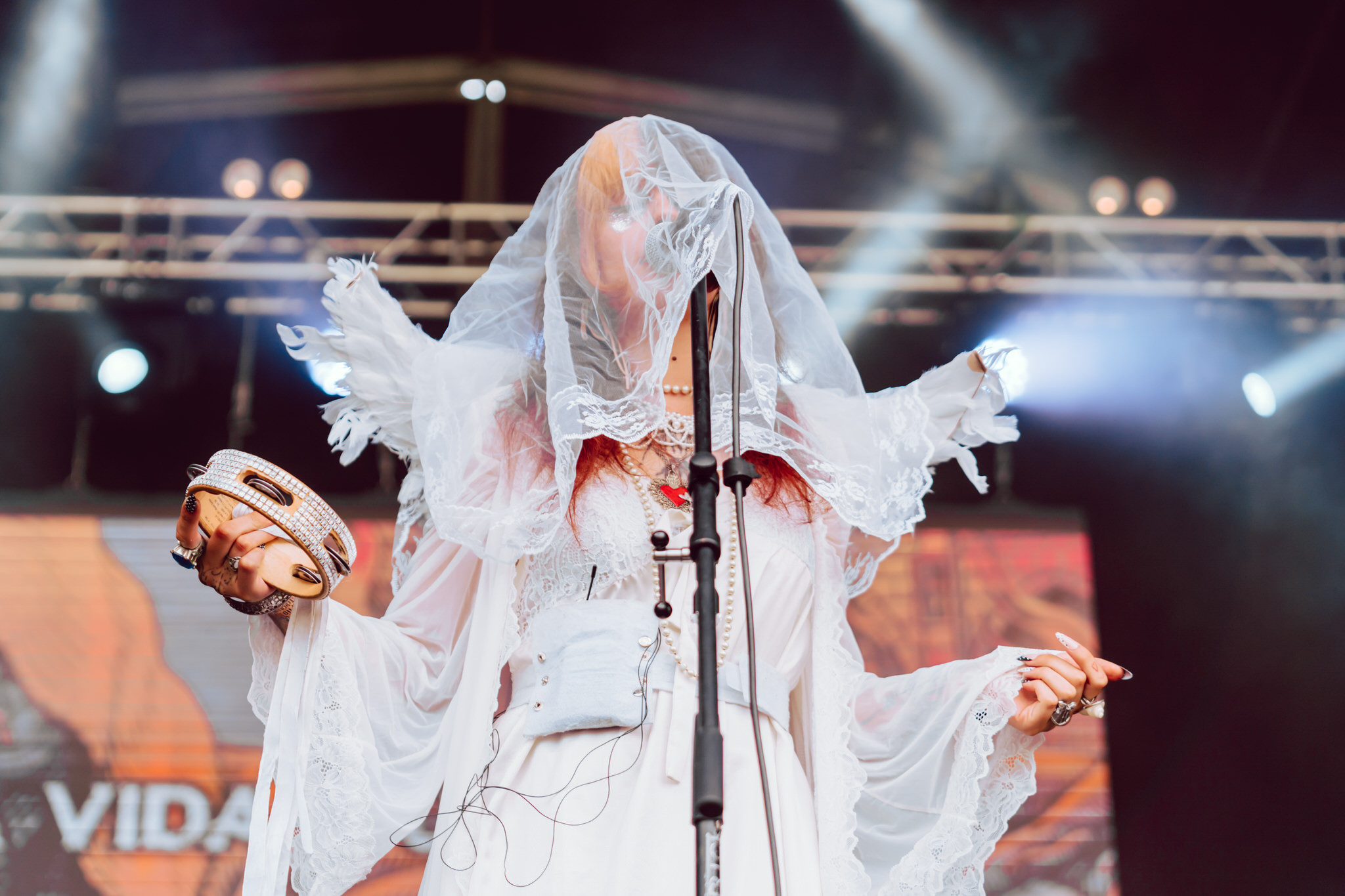
Summer of Hate provided one of the most distinctive contrasts within the Portuguese programme.
The Espinho-based band combines psychedelic music with shoegaze, post-punk, noise rock and influences drawn from several decades of alternative music. Their references include The Jesus and Mary Chain, The Brian Jonestown Massacre, The Church, Spiritualized and Radiohead, while elements of global and Middle Eastern music have also entered their sound.
The release of Blood & Honey in 2026 represented an important stage in the band’s development, with the album issued by Tee Pee Records. The record follows their debut, Love is Dead! Long Live Love!, and expands the band’s psychedelic and shoegaze foundations into a heavier direction.
Their inclusion illustrated perhaps better than any other Portuguese act how Inferno das Febras treats the idea of “heavy” music as something broader than genre classification. Summer of Hate bring distortion, volume and psychedelic intensity from a different musical tradition, creating a useful contrast with the metal bands around them.
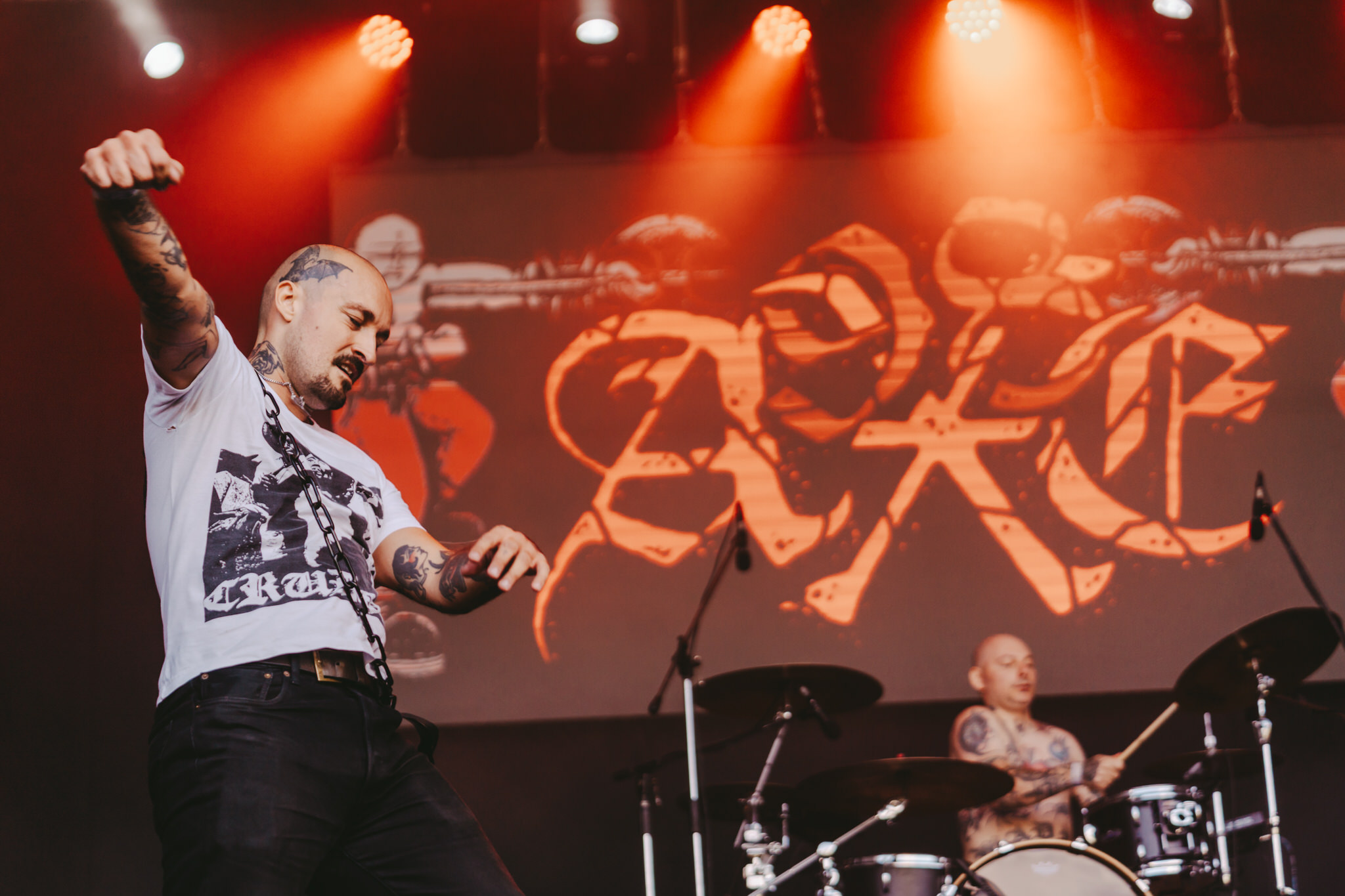
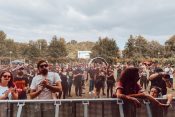
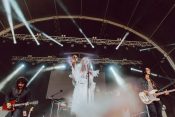
98 AXE
(full gallery below)
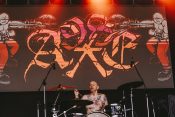
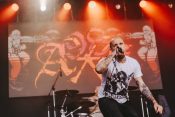
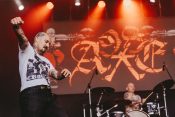
98 AXE occupied a separate position within the Portuguese programme, contributing to the festival’s wider exploration of alternative and heavy music. Their presence helped maintain the stylistic variety that characterised the second day, where extreme metal, hardcore, psychedelic music and experimental sounds appeared alongside one another.
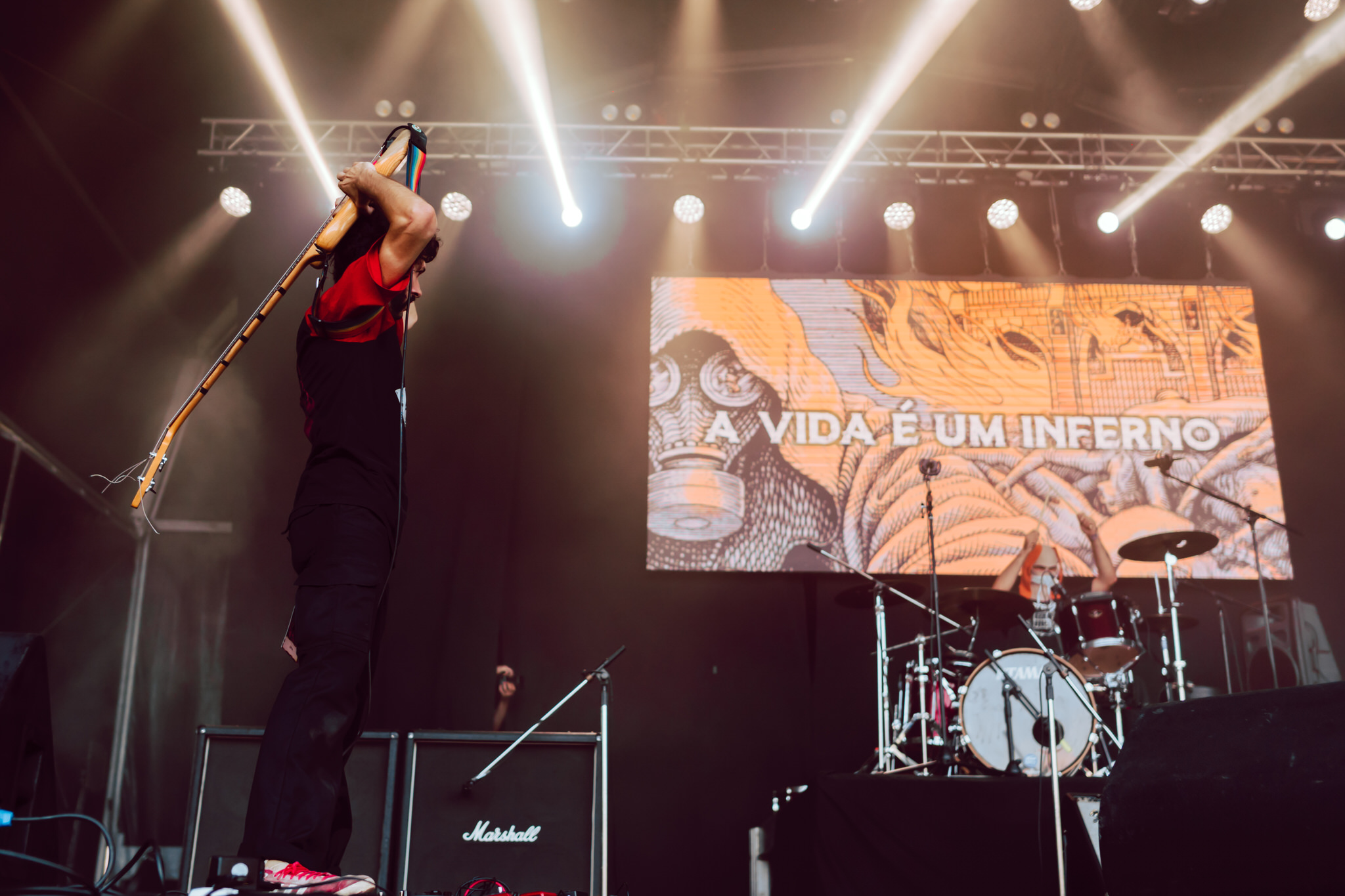
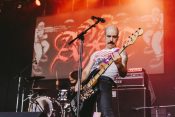
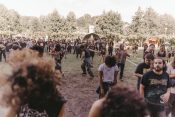
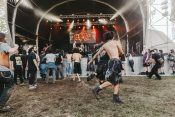
OKA: Expanding the Portuguese Spectrum
(full gallery below)
OKA were another example of the festival’s broad approach to domestic programming. Rather than simply constructing a bill around traditional metal, Inferno das Febras used its Portuguese contingent to explore different interpretations of alternative and heavy music.
Their position on the second day helped maintain the stylistic movement that characterised the festival, where heavier extreme-metal performances could be followed by projects working further towards alternative, psychedelic or experimental territory.
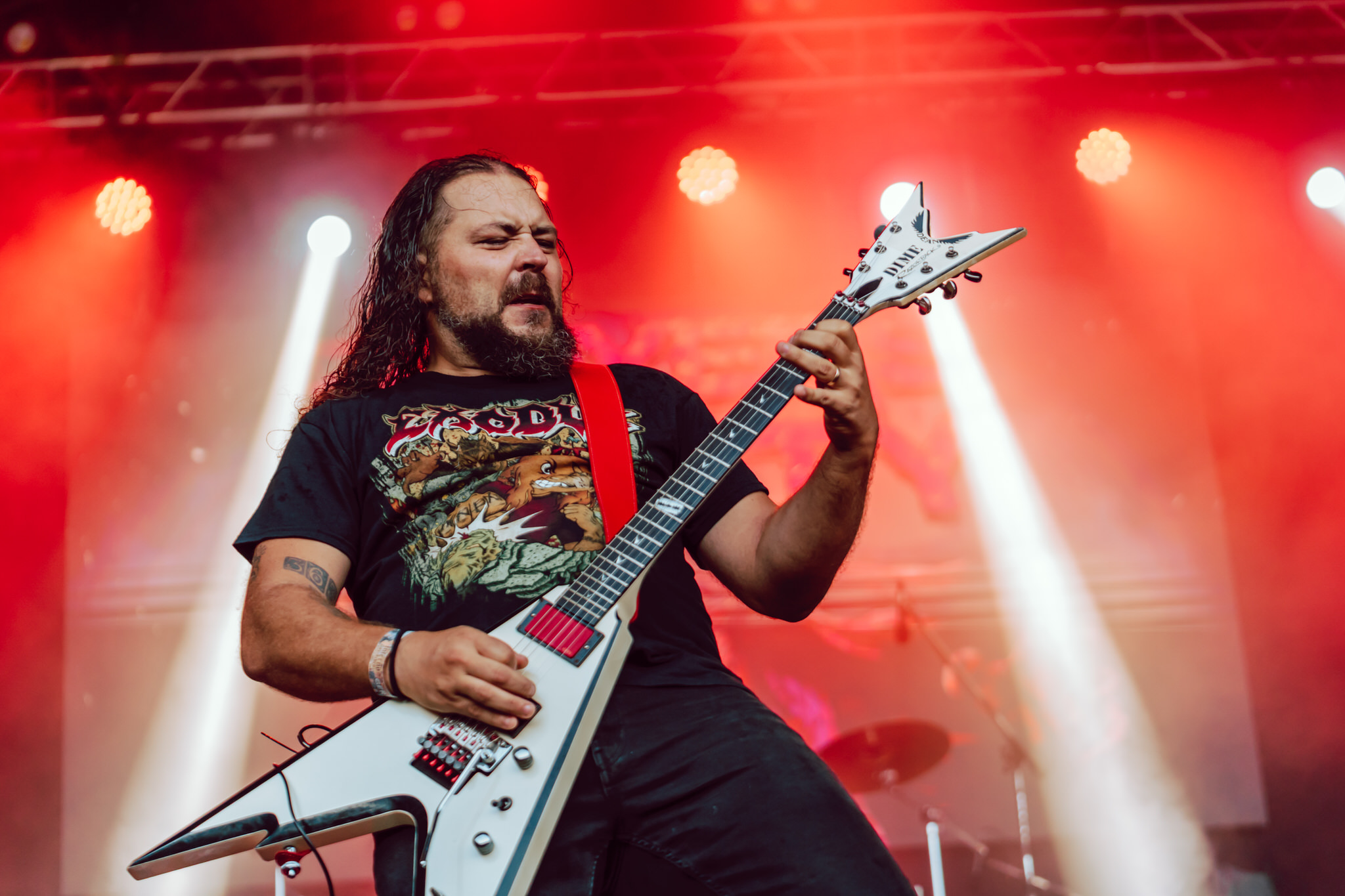
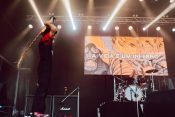
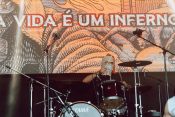
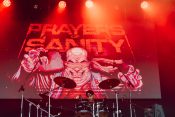
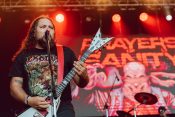
Prayers of Sanity
(full gallery below)
Prayers of Sanity represented another strand of Portugal’s contemporary extreme-metal scene. Their inclusion added further weight to the festival’s domestic programme, placing an established Portuguese act alongside international names and highlighting the depth of the country’s underground.
Their appearance also contributed to the more aggressive side of the second-day line-up, reinforcing Inferno das Febras’ connection to the broader European extreme-metal circuit.
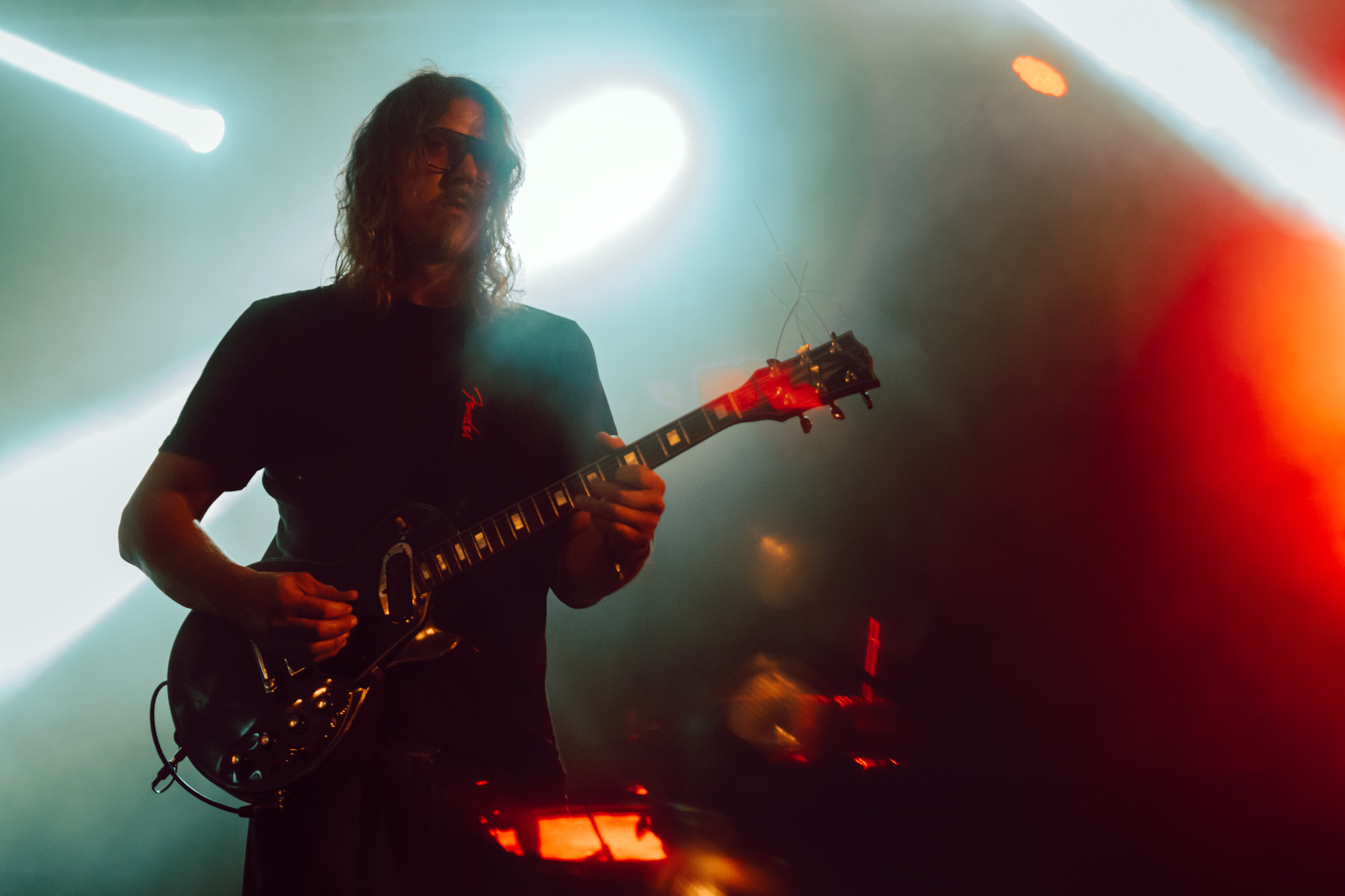
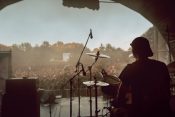
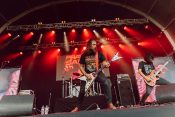
Rotor: Instrumental Heavy Music
(full gallery below)
German instrumental band Rotor occupied another distinctive position within the programme. Their music is rooted in heavy instrumental rock and draws from stoner, psychedelic and progressive traditions.
Their appearance was particularly relevant because it marked Rotor’s first performance in Portugal, according to the festival’s announcement.
Without a vocalist, Rotor’s music depends entirely on the interaction between guitar, bass and drums. This allows the instrumental arrangements themselves to carry the narrative, moving between heavier passages and more expansive psychedelic sections.
Their inclusion alongside Belzebong and Five the Hierophant created one of the festival’s strongest connections between heavy rock, psychedelia and experimental music. It also demonstrated the extent to which Inferno das Febras avoids relying exclusively on conventional vocal-driven metal.
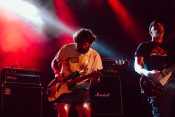
EYES: Hardcore Looking Beyond the Formula

(full gallery below)
Danish band EYES brought a contemporary hardcore perspective to the second day. Based in Copenhagen, the band has developed a sound that combines hardcore aggression with more unconventional structures, melodic elements and noise-oriented textures.
Their 2018 debut EP and 2020 album Underperformer established the band’s approach, while Congratulations, released in 2023, further developed the combination of groove, melody and irregular hooks. The album was produced by Jacob Bredahl, known for his work with LLNN and Lifesick.
EYES are also connected to the broader Danish experimental-heavy scene through members involved with LLNN, another band associated with the intersection of hardcore, noise and post-metal. Their inclusion at Inferno das Febras therefore provided another connection between traditional hardcore and the festival’s more experimental side.
The band’s music is confrontational without being limited to the conventional vocabulary of hardcore, making them an appropriate choice for a festival whose programming repeatedly crosses stylistic boundaries.
They even had Paulo Rui from Besta, Avesso and Redemptus (among others), which made his second guest appearence on the festival singing along as a guest.
Master: A Piece of Death Metal History
(full gallery below)
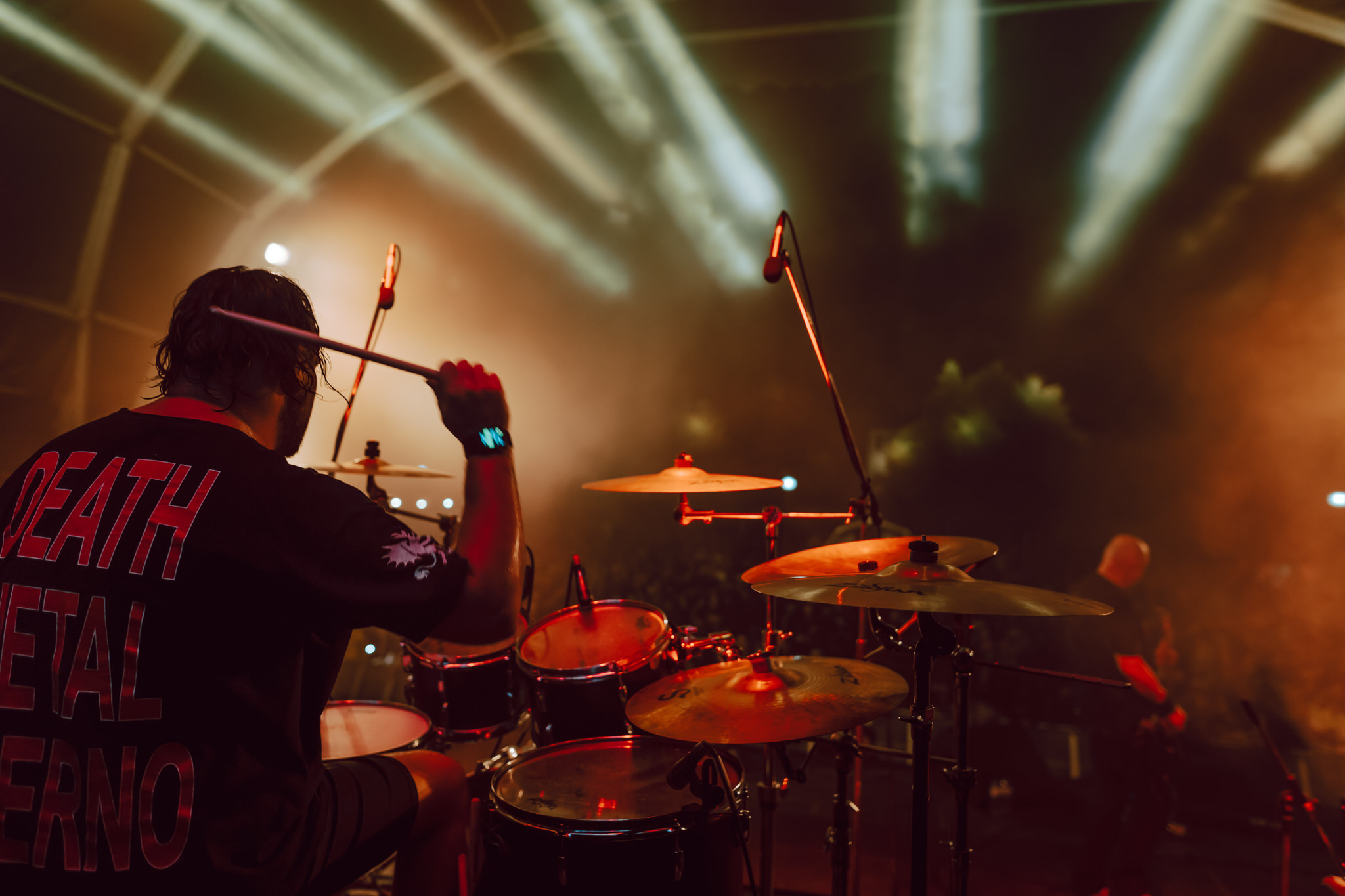
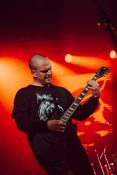
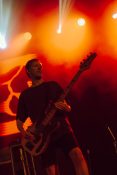
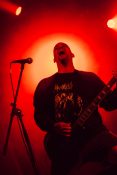
Among the most historically significant names on the 2026 bill were Master. Formed in Chicago in 1983 by bassist and vocalist Paul Speckmann, the band emerged during the formative period of extreme metal, at a time when the boundaries between speed metal, hardcore punk and what would eventually become death metal were still being established.
Master’s importance is not simply connected to longevity. Speckmann’s approach helped define an early version of death metal based on direct, aggressive riffing rather than technical excess. The band’s self-titled debut eventually appeared in 1990 after years of difficulties surrounding its release, but Master had already developed an underground reputation during the previous decade. Speckmann has remained the band’s central figure and only constant member.
Master’s presence at Inferno das Febras therefore represented a direct connection to the origins of extreme metal. Their music has retained an intentionally raw character throughout the band’s career, resisting the increasingly polished production and technical orientation that became common within death metal.
Their inclusion also provided one of the festival’s clearest historical reference points: alongside newer generations of extreme and alternative music, Inferno das Febras presented a band that was already active before many of the genres represented elsewhere on the bill had acquired their current definitions.
Fugitive: Crossover Through a Modern Texas Lens

(full gallery below)
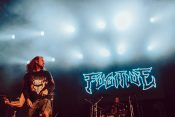
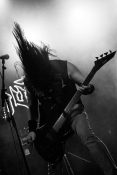
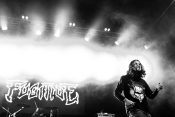
If Master represented an earlier generation of extreme metal, Fugitive offered a contemporary interpretation of another foundational underground language: crossover thrash.
Formed in Fort Worth, Texas, in 2021, Fugitive combines thrash metal with hardcore and carries a particularly strong connection to the Texas crossover tradition. The band includes guitarist Blake Ibanez, known for his work with Power Trip, a group that played a major role in bringing crossover thrash to a new generation of listeners. Fugitive’s sound draws from the collision between fast, aggressive thrash riffing and the physical immediacy of hardcore.
That connection is important when considering Fugitive within the Inferno das Febras programme. Their music does not attempt to reproduce the 1980s crossover formula as an exercise in nostalgia. Instead, it treats that vocabulary as a foundation for a contemporary band whose approach is equally comfortable within metal and hardcore contexts.
Their appearance also strengthened the festival’s connection with the current international crossover circuit, placing one of the newer American names alongside Master and Arkangel and creating a line through several generations of aggressive music.
Grog: Three Decades of Portuguese Extreme Metal
(full gallery below)
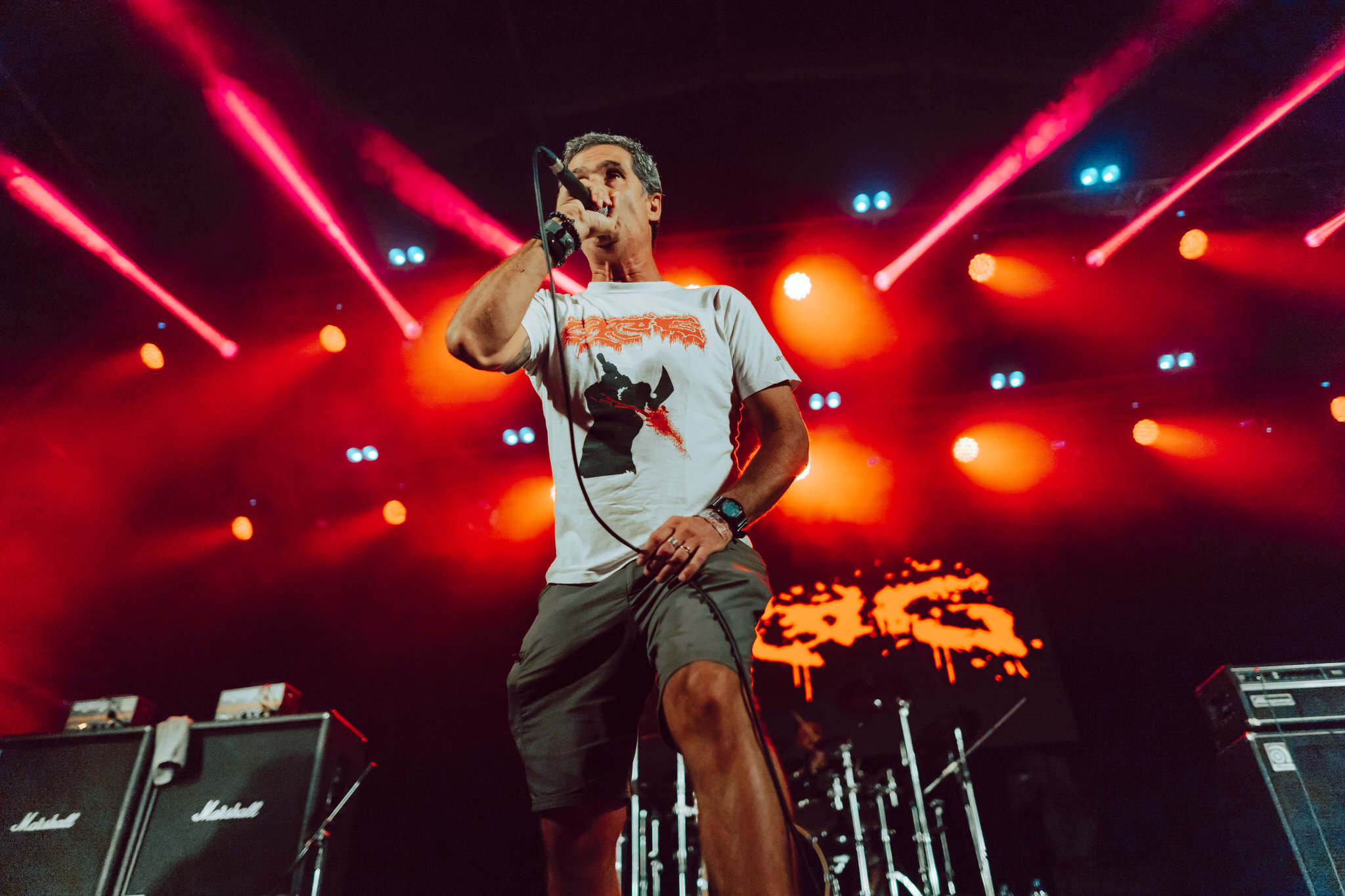
Among the Portuguese names, few carried the same historical weight as Grog.
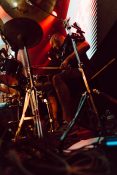
Formed in 1991, the Oeiras-based band has remained active for more than three decades, operating within brutal death metal and grindcore. Their early influences came from the formative grind-gore and death-metal scenes, with bands such as Carcass, Repulsion, Impetigo, Napalm Death and Autopsy providing important reference points.
Grog’s discography includes Macabre Requiems, Odes to the Carnivorous, Scooping the Cranial Insides, Ablutionary Rituals and Sphere of Atrocities, released in 2025.
Their presence was important beyond the simple representation of Portuguese metal. Grog belong to a generation that helped establish extreme metal as a serious part of the country’s underground culture during the 1990s.
At Inferno das Febras, they represented a direct link between Portugal’s early extreme-metal scene and the contemporary underground environment in which the festival operates.
A Festival Built Around Contrast
The strength of Inferno das Febras 2026 ultimately came from the relationship between these different acts.
Master and Grog represented different generations of extreme metal, separated by decades but connected by an uncompromising approach to underground music. Fugitive and Arkangel brought the relationship between metal and hardcore into focus from different generations and geographical perspectives. Whores. and EYES demonstrated how noise and hardcore can move beyond conventional genre structures, while Belzebong and Lord of Confusion explored different interpretations of doom and stoner heaviness.
Five the Hierophant and Rotor pushed the programme towards instrumental and experimental territory, while Cat Soup and Summer of Hate demonstrated how Portugal’s alternative scene can occupy similar territory without necessarily being defined as metal.
This was precisely what made the 2026 edition coherent despite its stylistic diversity. The festival’s programme was not constructed around a single genre. Instead, it was built around a broader understanding of underground music, where intensity, experimentation and independence provide the common ground.
A Small Festival with a Clear Identity
Inferno das Febras does not attempt to compete with Portugal’s largest festivals in terms of capacity or production scale. Its relevance comes from something different: the ability to create a concentrated environment in which international touring acts, Portuguese underground musicians and audiences can share the same space.
The festival’s location contributes significantly to that identity. Free camping is positioned close to the venue, while the river and surrounding park provide a natural environment that contrasts with the industrial or urban spaces normally associated with heavy-music events.
The 2026 edition also demonstrated that this approach can coexist with an increasingly international programme. Master, Fugitive, Whores., Belzebong, Arkangel, Five the Hierophant, Rotor and EYES each arrived from different scenes and musical traditions, yet none felt disconnected from the Portuguese acts surrounding them.
That balance may ultimately be the festival’s most important achievement.
Inferno das Febras has reached its eighth edition without abandoning the characteristics that distinguish it from larger events. Its programme remains willing to take risks, its Portuguese contingent is treated as an essential part of the festival rather than an obligation, and its international bookings are selected according to a broad interpretation of heavy and alternative music.
The 2026 edition therefore confirmed the festival’s place within Portugal’s independent music landscape. It is a small event, but its ambitions are not defined by size. Through two days of contrasting sounds, from old-school death metal and grindcore to hardcore, sludge, doom, psychedelic rock and experimental music, Inferno das Febras continues to create a space where different parts of the underground can meet.
Ambient











Navegantes da Rua

Summer of Hate










98 AXE




OKA





Prayers of Sanity






Rotor













Eyes























Master






Fugitive




















Grog





















Comments are closed.