

Day 4 – August 3rd
The final day arrived with the physical consequences of the previous three written across the festival grounds. Voices were strained, legs and necks were tired of all the headbanging. Yet the knowing it was the last day of the festival, people gathered their strength. From local hard rock to progressive experimentation, industrial darkness, death metal, hardcore, Norwegian black metal, technical brutality, and late-night goregrind, Sunday still had a considerable amount of damage left to inflict.
The honour of opening the last day fell to Diesel-Humm!, a band from Vagos performing in front of family, friends, and a supportive local audience. Returning to the festival while celebrating 25 years of activity, the group also presented a modified lineup. Luís Santos was now the sole vocalist, replacing the previous male-and-female vocal combination, while the addition of violin introduced a new melodic dimension to the songs. Their hard rock and traditional heavy metal foundations were immediately apparent in “Nature’s Screaming,” “Diesel’s Back,” and “Monster of Silence.” The performance was direct and accessible, but the violin allowed the band to move into more atmospheric territory without losing its weight. “(Stop) No More War” addressed the instability of the contemporary world. The band concluded with a version of Black Sabbath’s “Paranoid,” adding another Ozzy Osbourne tribute to a weekend already filled with them. For a band playing at home, it was a warm and appropriate way to begin the last afternoon.
Australia’s Jamart then offered one of the most unusual performances of the day. The opening track, “MoDown,” began with an instrumental passage accompanied by a dancer whose movements shifted through contemporary dance. It immediately became clear that Jamart intended to provide more than a straightforward progressive metal concert. The band’s sound combined progressive structures with groovy alternative metal and a somewhat transcendent atmosphere. Calm, introspective sections gradually gave way to heavier riffs, allowing songs to develop through contrast rather than constant aggression. “Floors” demonstrated this duality particularly well, moving between melodic contemplation and muscular rhythmic sections. Later in the set, “BanCkull” revealed a more aggressive side of the band. Jamart’s performance did not provoke the same physical response as some of the festival’s more direct bands, but it succeeded in holding the audience through atmosphere and dynamics. It was a distinctive journey and a valuable reminder that heaviness does not always depend on speed or brutality.
Chontaraz followed on the Illegal stage with another visually ambitious proposition. Formed in Norway and featuring an amazing drummer, the one and only Fotis “Narwhal” Benardo, formerly of Septicflesh, the group combined gothic and industrial metal with theatrical characterisation. Their appearance immediately reinforced the musical concept. Painted faces, elaborate clothing, and the dramatic posture of vocalist Chontaraz performed an almost cinematic quality. “Ra Fa El” opened with a forceful industrial riff, establishing the mechanical weight that would remain central throughout the set. Much of the performance introduced material from “Phantom of Reality,” including “Prayer to the Masses,” “Scream,” and “You’re the One to Blame.” Heavy programmed textures and dark, memorable melodies created a sound that was accessible without becoming conventional. Although unfamiliar to much of the Portuguese audience, Chontaraz quickly captured its attention and emerged as one of the final day’s most pleasant surprises, along with the always pleasureful-to-see drumming skills of Fotis Benardo!
The next performance had not been part of the original schedule. Stercore were unable to reach the festival after being involved in a road accident. Fortunately, no serious injuries were reported, but continuing the journey to Vagos was no longer possible. Their place was filled at extremely short notice by Portugal’s Ladon Heads. Rather than appearing hesitant under the circumstances, the band used the unexpected opportunity to present an assured display of traditional heavy metal strongly influenced by the New Wave of British Heavy Metal. “Stealers of the Light” immediately established the old-school direction, supported by melodic guitar work, clearly defined rhythms, and clean vocals designed for raised fists and collective choruses. Led by Fernando Ferreira, the group performed nice material composed for an upcoming album. Ladon Heads had received almost no preparation time and were performing before an audience that had expected another band. Even so, they responded with professionalism and enthusiasm. The circumstances may have been unfortunate, but the replacement gave traditional heavy metal an additional and welcome presence at Vagos.
The music returned to significantly darker territory with Okkultist. By the time the Portuguese death metal band appeared, the area in front of the Illegal stage had filled rapidly, demonstrating the group’s increasingly visible position within the national extreme metal scene. “O.M.E.N.” is the band’s latest album and marked a big part of the group’s performance at Vagos. “Death to Your Breed” was the opening track and immediately established an atmosphere of calculated malevolence. The sound was fast and aggressive, yet remained clear enough for the dense guitar arrangements, solos, and rapid percussion to retain their definition. The charismatic female screamer Beatriz Mariano was the obvious focal point. Her guttural vocals were exceptionally deep and controlled, while her stage presence aligned naturally with the band’s occult imagery. “Thy Blood, Thy Flesh, Thy Sacrifice” and “Crimson Ecstasy” maintained the intensity, supported by strong interaction between the musicians and an enthusiastic response from the audience. The closing song moved away from Okkultist’s own catalogue but maintained the same level of energy. Their cover of Children of Bodom’s “Sixpounder” was performed as a tribute to Alexi Laiho and received an immediate reaction from the crowd. It was a forceful conclusion to one of the strongest Portuguese performances of the final day.
Brazilian hardcore band Worst slammed down the hammer at Vagos. From the first moments, the group approached the Vagos stage with the clear intention of extracting every remaining trace of energy from the audience. Thiago “Monstrinho” stood at the centre of the attack, moving constantly and delivering the lyrics with an imposing combination of aggression and charisma. the ferocious attitude got closer to the crowd at barriers, where Thiago shared a bonding moment with the most enthusiastic fans. The set moved between Portuguese-language songs such as “Te Desejo Todo Mal do Mundo” and “Desenterrado” and English material including “Left for Shit” and “To the Brink of Death,” the latter taken from the band’s new album “Flesh”. Musically, Worst combined old-school hardcore urgency with metallic riffs and heavy breakdowns, with the subtlety of a sledgehammer through a glass window. The response was immediate and sustained. A large circle pit remained active throughout much of the performance, while crowdsurfers arrived with remarkable frequency. On the fourth day of the festival, Worst somehow generated one of its largest discharges of adrenaline.
From one brutal show to another, Desolated maintained control of the Illegal stage after replacing Swedish band Thrown, whose cancellation had created another alteration to the original programme. Following the intensity of Worst was not an easy task, but the British band’s beatdown-influenced hardcore ensured there would be no sudden reduction in violence. “Numb” opened the performance with low-tuned guitars and a dense rhythmic attack. The band were presenting the new album “Finding Peace” and had arrived with Tony Evans, who had joined as vocalist the previous year. Evans quickly established a direct relationship with the crowd, repeatedly emphasising that both band and audience were there to enjoy themselves. At a Desolated concert, enjoyment naturally involved heavy breakdowns, crowdsurfing, and continuous movement in the pit. “Victim,” “Therapy,” and “Death by My Side” gave the audience exactly that. The group avoided elaborate staging and instead concentrated on physical presence and direct impact. Following Worst, Desolated ensured that hardcore remained in control of Vagos for another punishing set.
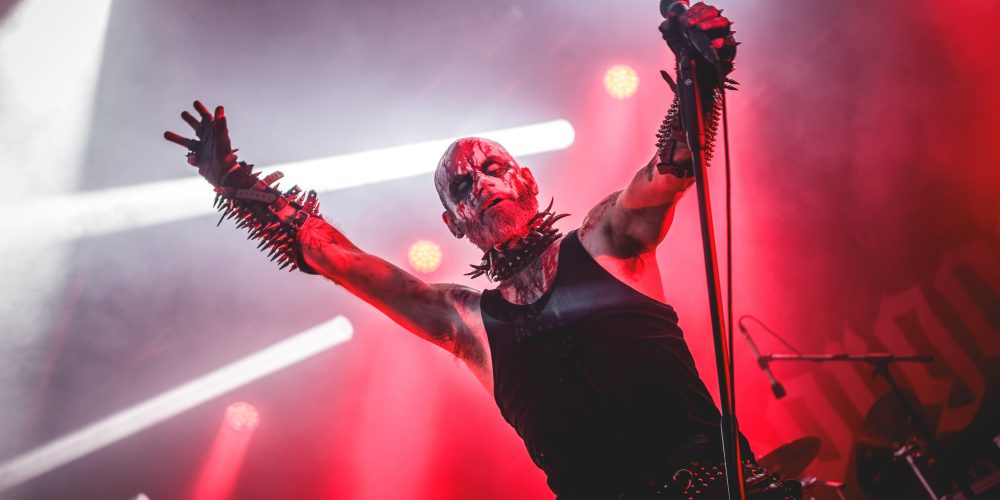
In the recent years, Vagos has brought some of the biggest names in Norwegian black metal history: Emperor, Dimmu Borgir, Mayhem, and now Gorgoroth. As daylight began to disappear, the atmosphere changed entirely. After Mayhem’s retrospective the previous night, Gorgoroth brought another major name from Norwegian black metal to the Vagos stage—but with a far colder and less explanatory approach. First and foremost, this kind of visual show should happen at nighttime, exclusively. Bathed almost exclusively in red light, the musicians appeared in their characteristic attire with their elaborate corpse paint and huge spike gauntlets, maintaining a distant posture throughout the performance. As expected, there was very little communication. And talking is not necessary in situations like this. The silence would only be broken when vocalist Hoest would announce a song, reinforcing the impression that the band had no intention of conventional audience interaction. The crowd remained substantial and didn’t move, as they were witnessing one of the most influential black metal bands of the 90’s. Gorgoroth moved across several periods of their discography through songs such as “Blood Stains the Circle,” “Cleansing Fire” and the particularly furious “Revelation of Doom”. There was time for more classics like “Katharinas Bortgang” and “Krig”. Even slower songs like “Aneuthanasia” worked well while slowing down the concert. Sadly, an amazing song like “Exit” was left out, probably due to having been written by King Ov Hell. The performance never lost intensity, nor did it offer any significant release from its darkness. “Kala Brahman” and “Unchain My Heart!!!” closed the set, leaving behind the sensation of having witnessed something deliberately severe and emotionally remote. Gorgoroth did not attempt to charm Vagos; they simply imposed their own world upon it.
Polish Death metal veterans Decapitated took the stage next. Shortly after beginning, the band was forced to leave the Illegal stage due to technical problems which halted the show. Fortunately, the interruption was brief. Once Decapitated returned, the setback was quickly forgotten beneath a dense and highly controlled technical death metal wave. “Cancer Culture” was featured the most on the band’s setlist and demonstrated the increasing role of groove within the band’s sound. Songs like “Earth Scar” make it difficult to stand still and now react to it. New vocalist Eemeli Bodde had big shoes to fill and handled the responsibility confidently, both in terms of vocal delivery and crowd control. A large circle pit remained active as the group moved between older material and went crazy when “Spheres of Madness” started playing. The quality of the sound was especially important during this performance. Decapitated’s music depends on precision, tightly controlled rhythm, and layers of guitar that can easily lose definition in a poor mix, something noticeable on classic hits like the groundbreaking “404”. At Vagos, the weight and detail remained intact, allowing the audience to experience the music with an almost physical density. The technical delay had threatened the beginning, but the concert that followed became one of the final day’s highlights.
At 11 p.m., Hatebreed arrived as the last headliner of Vagos Metal Fest 2025. From the beginning, there was no gradual introduction. “I Will Be Heard” was accompanied by columns of flame that rose almost to the height of the stage, immediately turning the concert into the great spectacle that had been anticipated. With a lineup change, Matt Bachand of Shadows Fall joined the band on guitar, replacing Wayne Lozinak, who is recovering from health problems. The temporary change did nothing to reduce Hatebreed’s impact. Led by Jamey Jasta, the group maintained an exceptional level of energy while drawing from across its career, with particular emphasis on the early albums that helped define the meeting point between hardcore and metal. “Before Dishonor,” “A Call for Blood” and “To the Threshold” triggered waves of crazy fans slamming and moshing everywhere. The band’s groove was familiar to several generations of fans. Before “Destroy Everything,” Jasta recalled the “ball of death.” An enormous inflatable ball marked with the band’s logo was released over the audience and continued to bounce above the crowd. Another tribute to Ozzy Osbourne provided one of the night’s emotional moments, with Jasta acknowledging Hatebreed’s history with Ozzfest and leading the crowd in a final salute.
By the time “Live for This” and “Looking Down the Barrel of Today” brought the set to its conclusion, the fatigue of four festival days had been temporarily erased. Hatebreed did not merely perform to an exhausted audience; they reactivated it. Their concert felt less like the end of a headlining set and more like one final collective confrontation with every physical limit the weekend had imposed.
Still, Vagos Metal Fest was not quite finished. The honour of closing the entire festival belonged to the Czech Republic’s Gutalax, continuing a tradition in which the final concert is reserved for humour, absurdity, and a particularly chaotic form of grind. Gutalax entered to the theme from “Ghostbusters,” immediately establishing the comic tone of the performance. Vocalist Maty quickl said hello and apologised to the festival for having to listen to the band’s self-described “shitty music.” The stage costumes, toilet brushes, flying toilet paper, inflatable excrement, and waste bins made the concert resemble a collision between goregrind and a deeply unhygienic carnival. Songs such as “Poopcorn,” “Robocock,” “Diarrhero,” “Vaginapocalypse,” and “Fart and Furious” were introduced with explanations that rarely improved the dignity of the situation. The audience became as important to the spectacle as the band. Toilet rolls travelled through the air, bins were used for crowdsurfing—sometimes with people inside them—and a huge circle pit remained active despite the late hour and the knowledge that Monday morning had already arrived. Gutalax were technically precise enough to prevent the concert from becoming merely a comedy routine, but seriousness was never the objective. After four days of extreme music, political anger, theatrical darkness, emotional tributes, and relentless physical activity, Vagos ended with laughter, disorder, and an impressive amount of bathroom-related imagery.
As the final notes disappeared into the early morning, the scale of the previous four days became easier to understand. Vagos Metal Fest 2025 had moved from emerging underground bands to internationally established names, while giving Portuguese metal, punk, hardcore, and grind a central place within the programme. The festival grounds had been covered in dust, foam, mud, toilet paper, and thousands of footprints.
More importantly, the audience had treated every day as a collective experience rather than a simple sequence of concerts. Circle pits formed beneath the afternoon sun, veteran bands were welcomed alongside unfamiliar names, and even after Hatebreed’s final headlining assault, a large crowd remained to celebrate with Gutalax. The physical exhaustion was undeniable. So was the reluctance to leave.
Vagos Metal Fest had reached the end of its four-day edition in the only way that seemed appropriate: loudly, chaotically, and with almost no one willing to admit that the weekend was truly over.
Can it get any crazier than this year?





Comments are closed.